Adam Smith’s “invisible hand” describes how resources in an economy are allocated to their best uses without anyone’s guidance, through prices and incentives. Inside companies, however, allocation is more directed: research by Chicago Booth’s Virginia Minni finds that good managers match workers to roles where they are most productive.
Using ten years of personnel data from a multinational company, covering 200,000 white-collar employees and 30,000 managers, Minni finds that the best managers actively reassign workers to roles that better fit their skills, making moves that later translate for the workers into higher pay and a greater likelihood of promotion. The results suggest that even a single stint under a “highflyer” manager can have a long-term effect on an employee’s career.
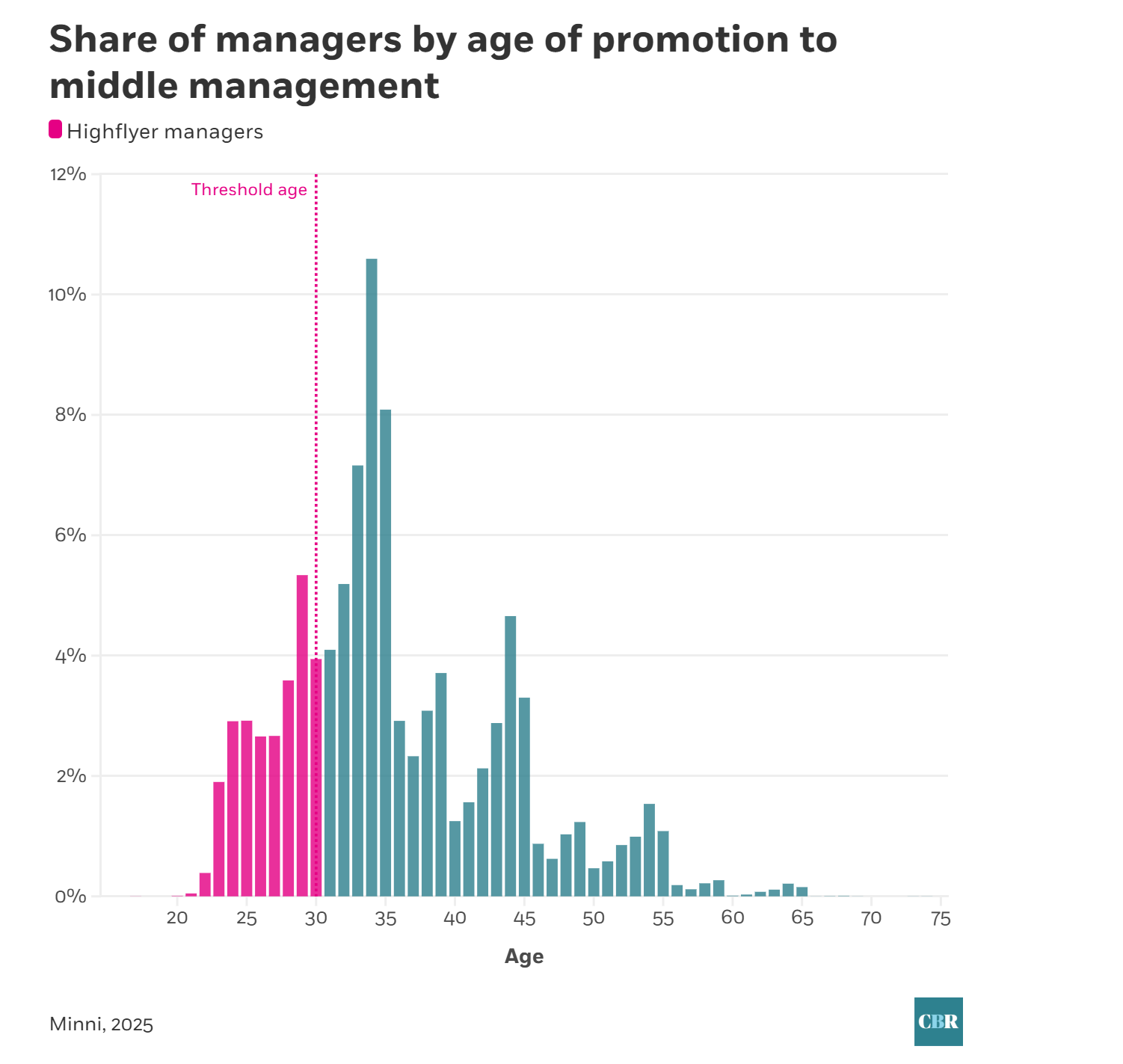
In the study, highflyer managers are defined as those managers promoted to middle management by age 30, about a fourth of the sample. This early promotion strongly predicted later managerial success, including a higher likelihood of promotion to director level, stronger performance ratings, and more positive leadership feedback relative to all other managers.
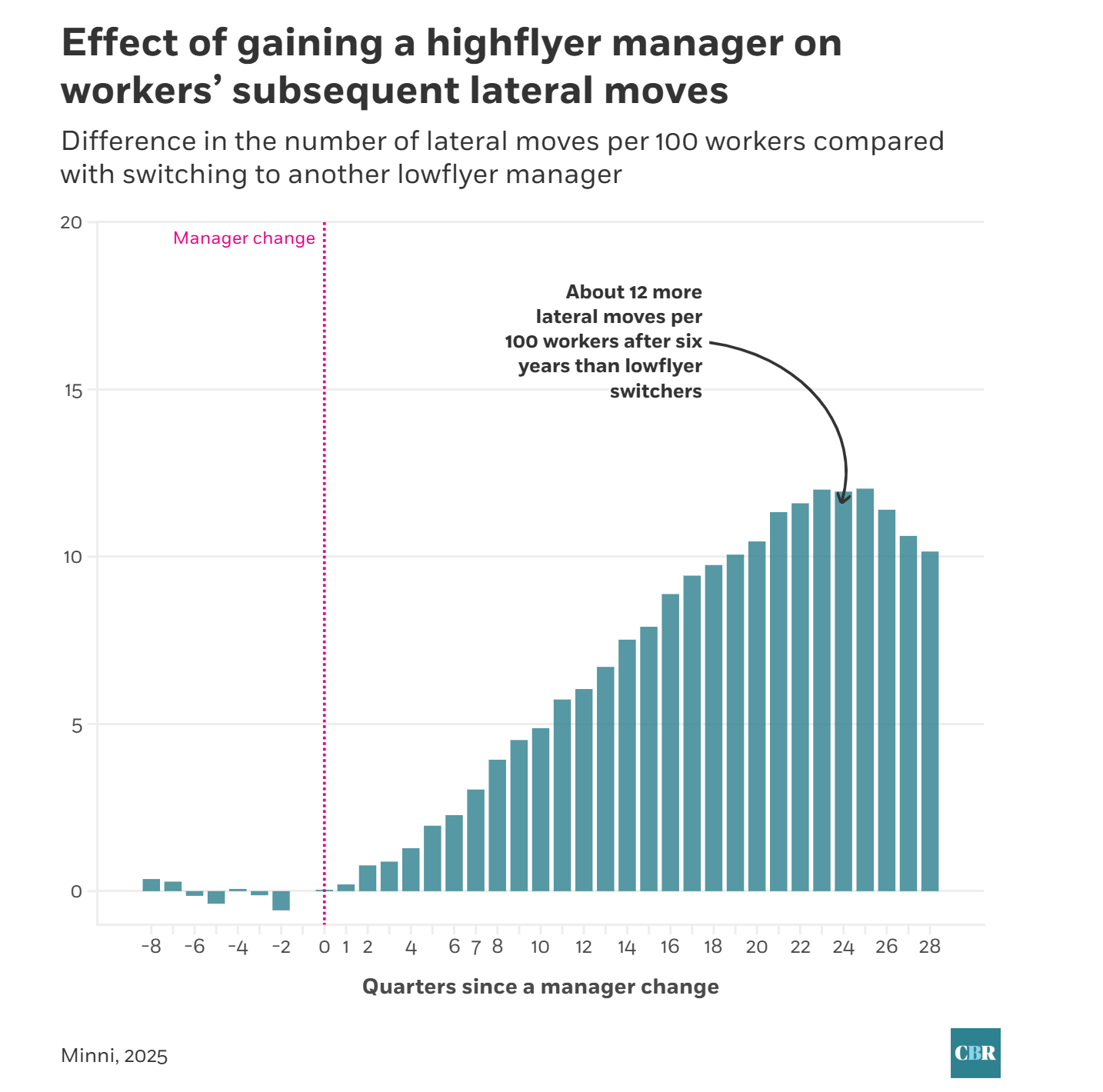
Workers who gained a highflyer manager made more lateral moves than those who switched to another lowflyer manager.
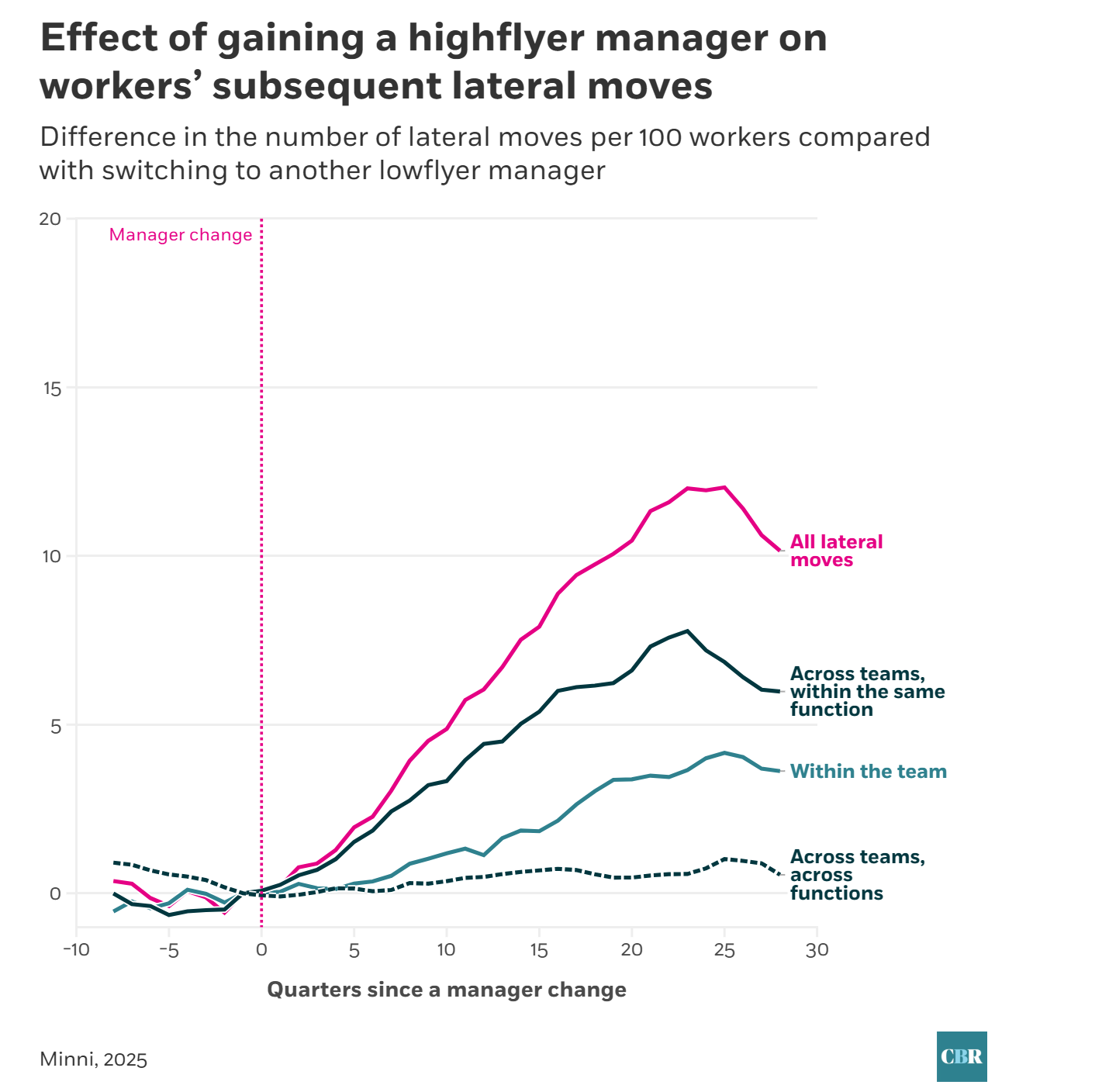
These lateral moves included role changes within the same team, across teams within the same function, and, more gradually, across functions.
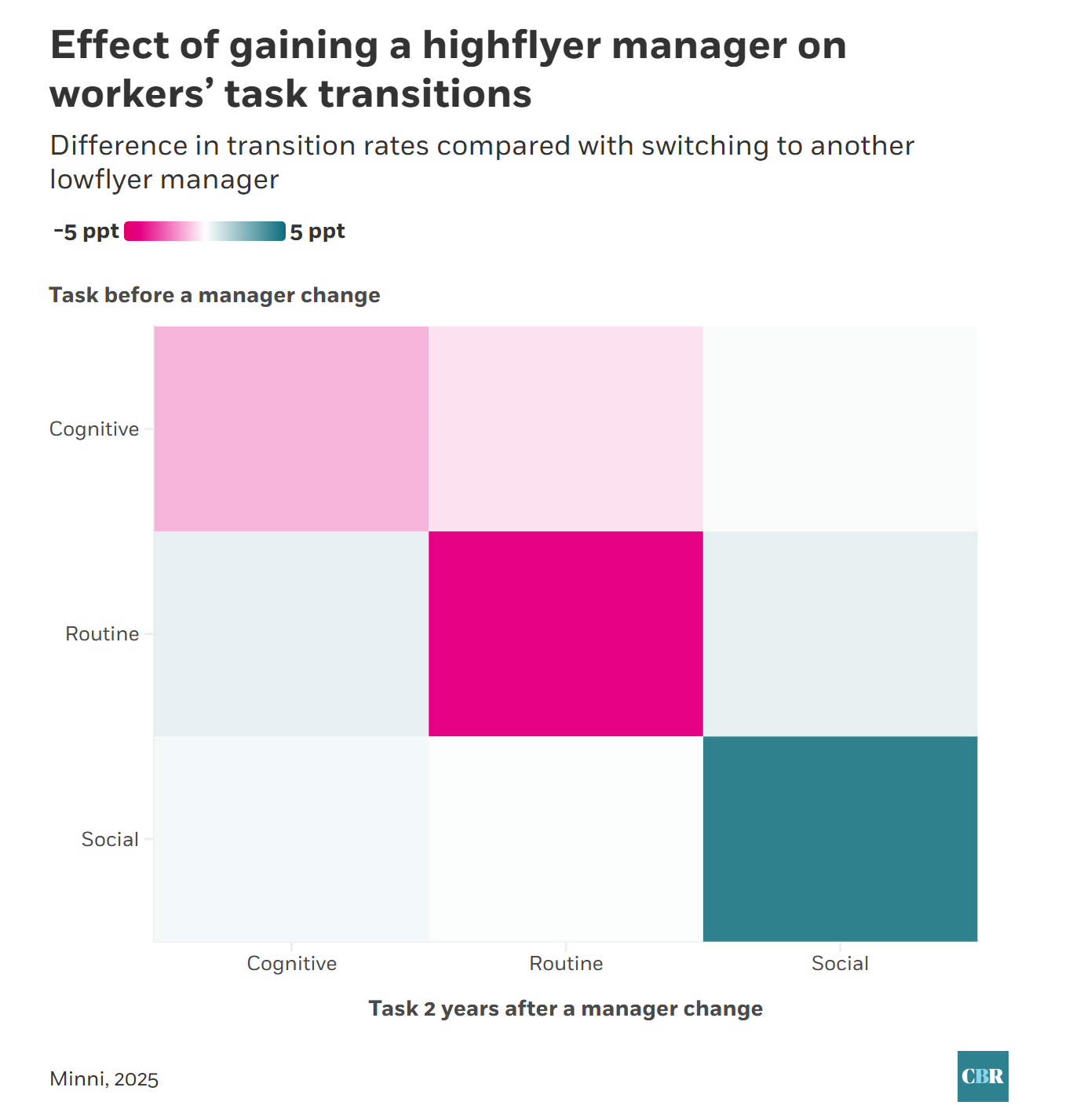
In many cases, the reassignments also changed the type of tasks workers performed. For example, two years after a manager change, workers who gained a highflyer manager were less likely to remain in routine tasks and more likely to move into cognitive (analytical) or social (interpersonal) work. Meanwhile, workers already in social tasks were more likely to stay there.
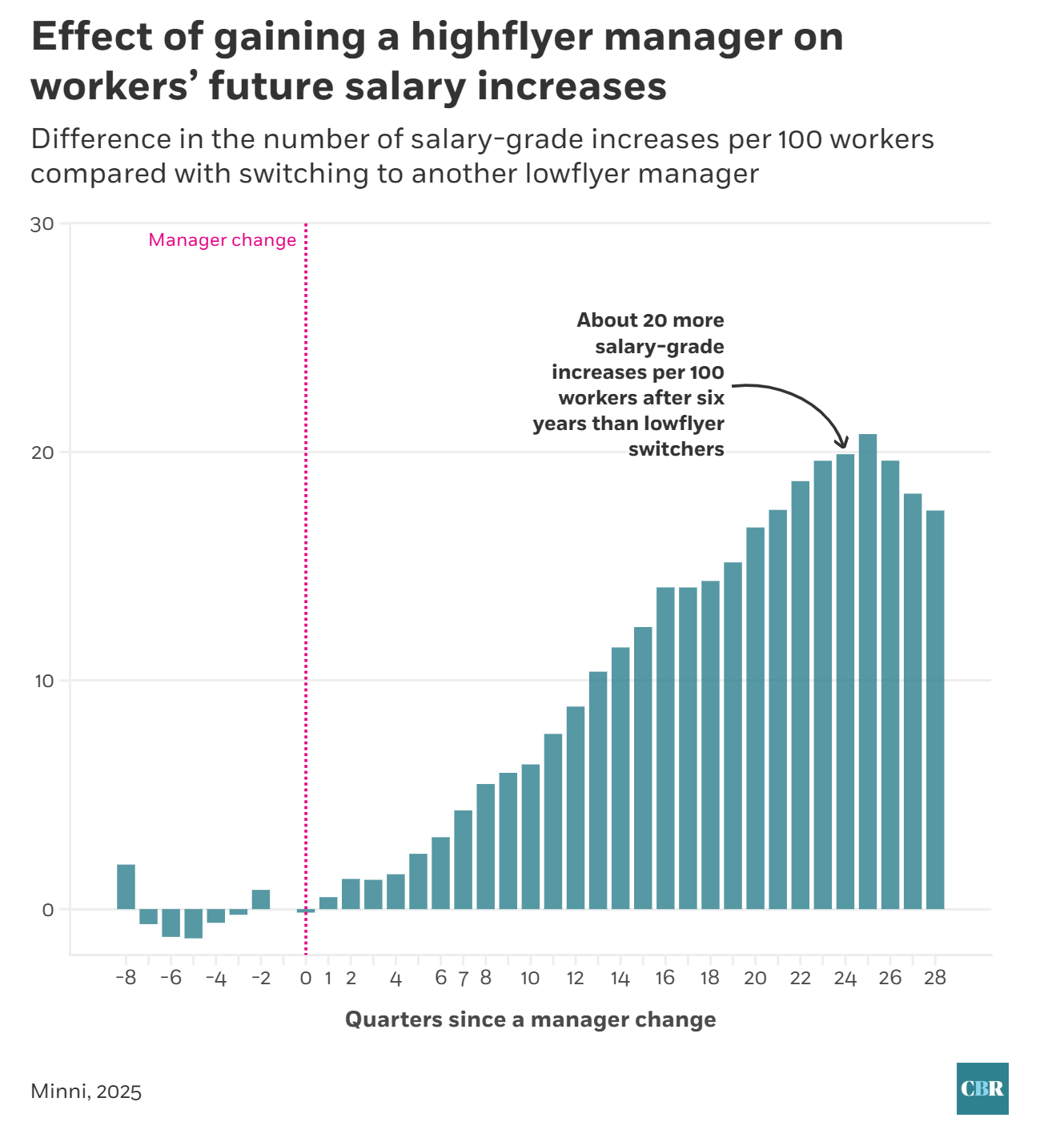
Workers who moved to highflyer managers were more likely to advance within the company’s salary-grade system, consistent with improved job matching following lateral reassignments.
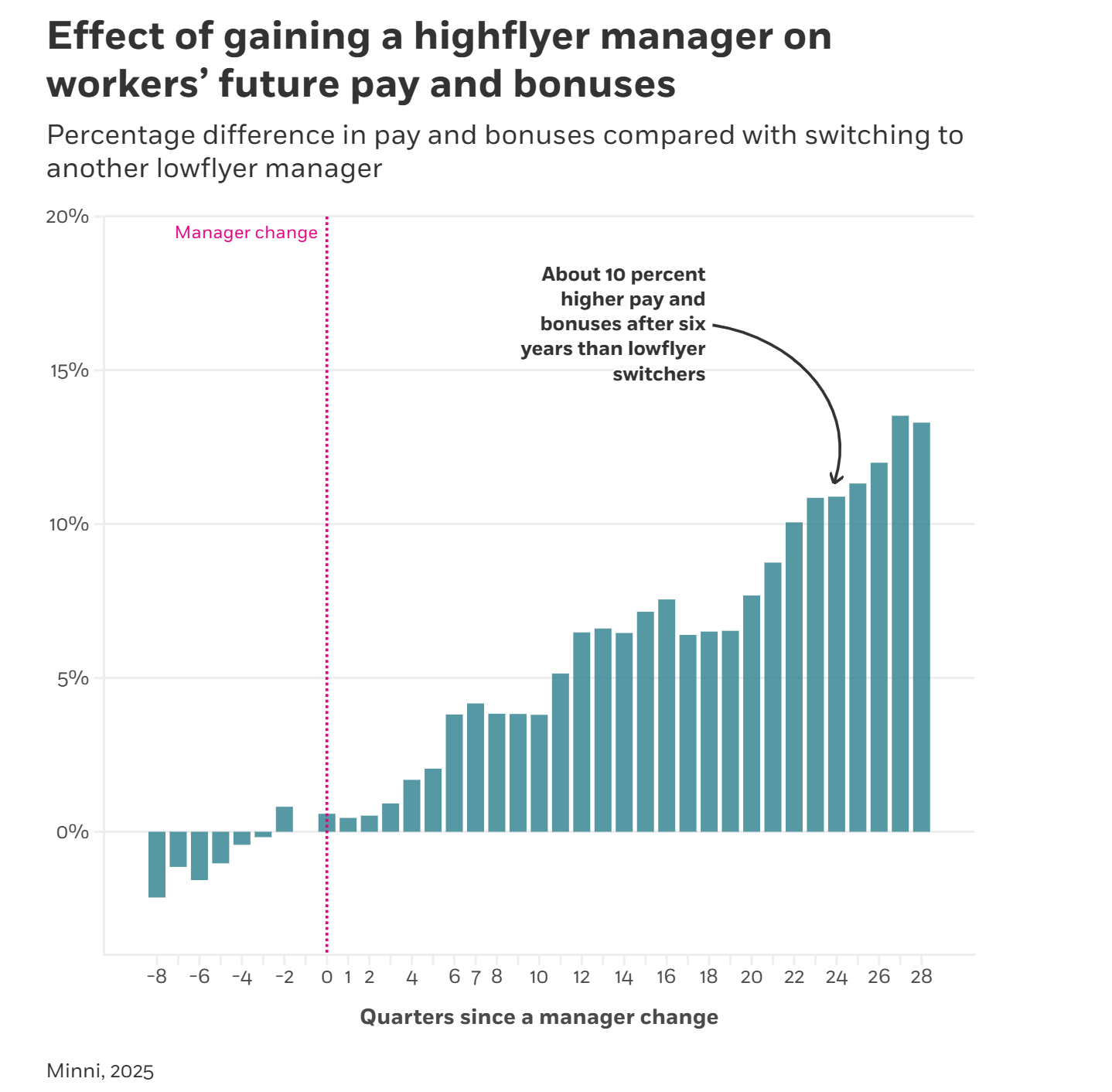
These salary-grade increases were accompanied by higher pay and bonuses over time . . .
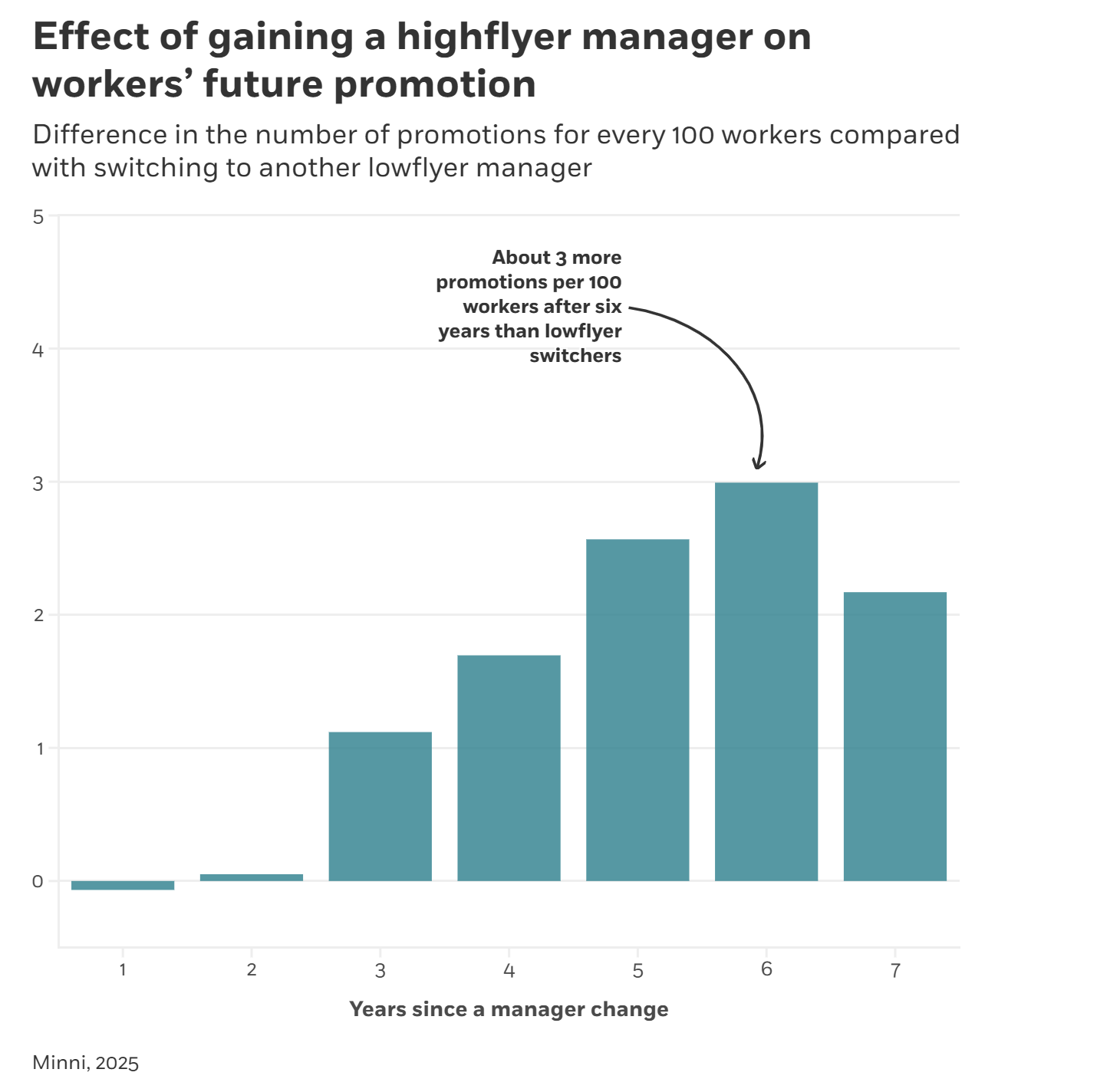
. . . and an increased likelihood of a formal promotion.
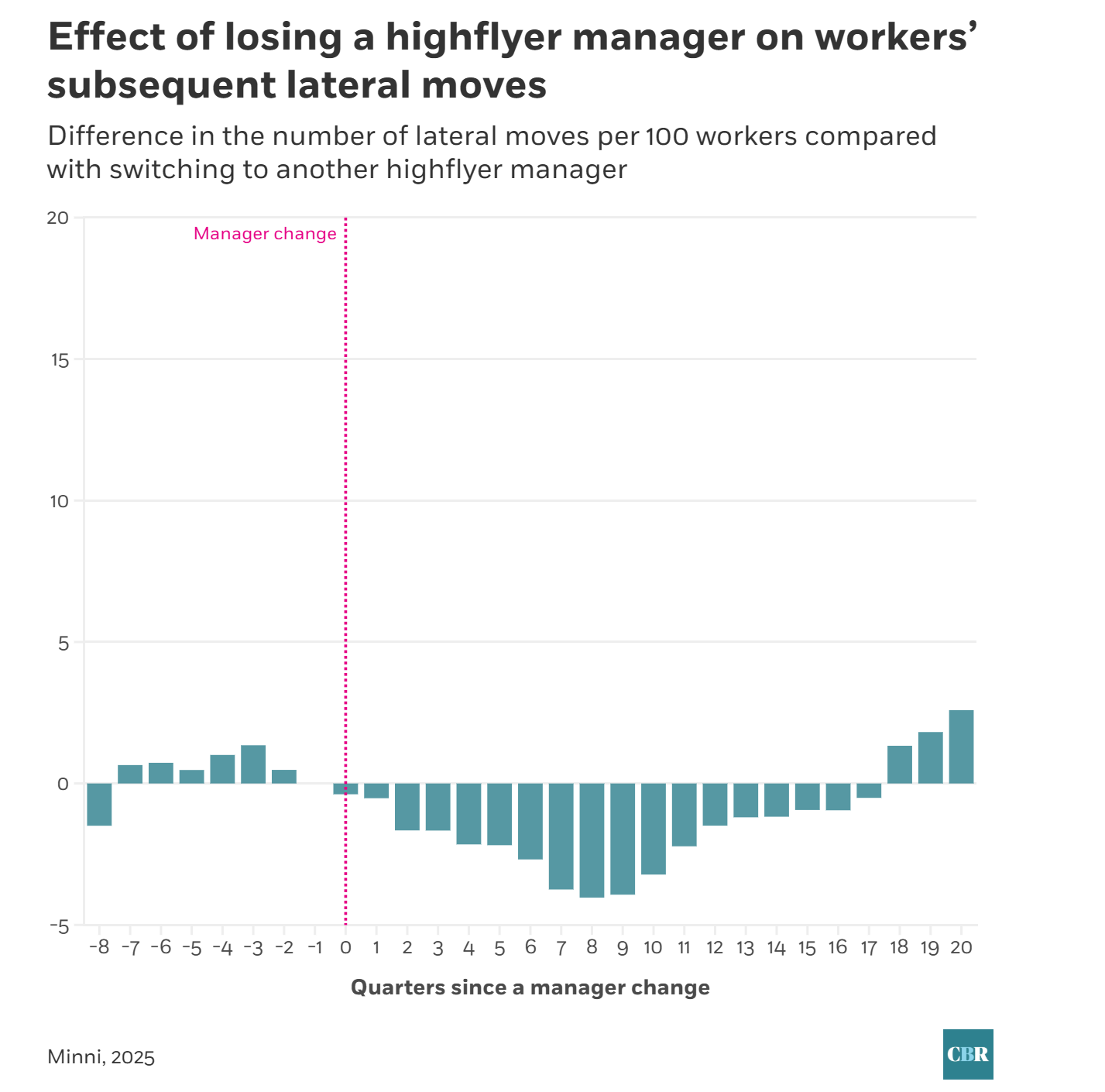
While workers benefited from moving to a highflyer manager, the researchers find no meaningful impact from losing one. When workers moved from a highflyer to a lowflyer, the number of lateral moves they made did not differ significantly from the number made by workers who switched to another highflyer . . .
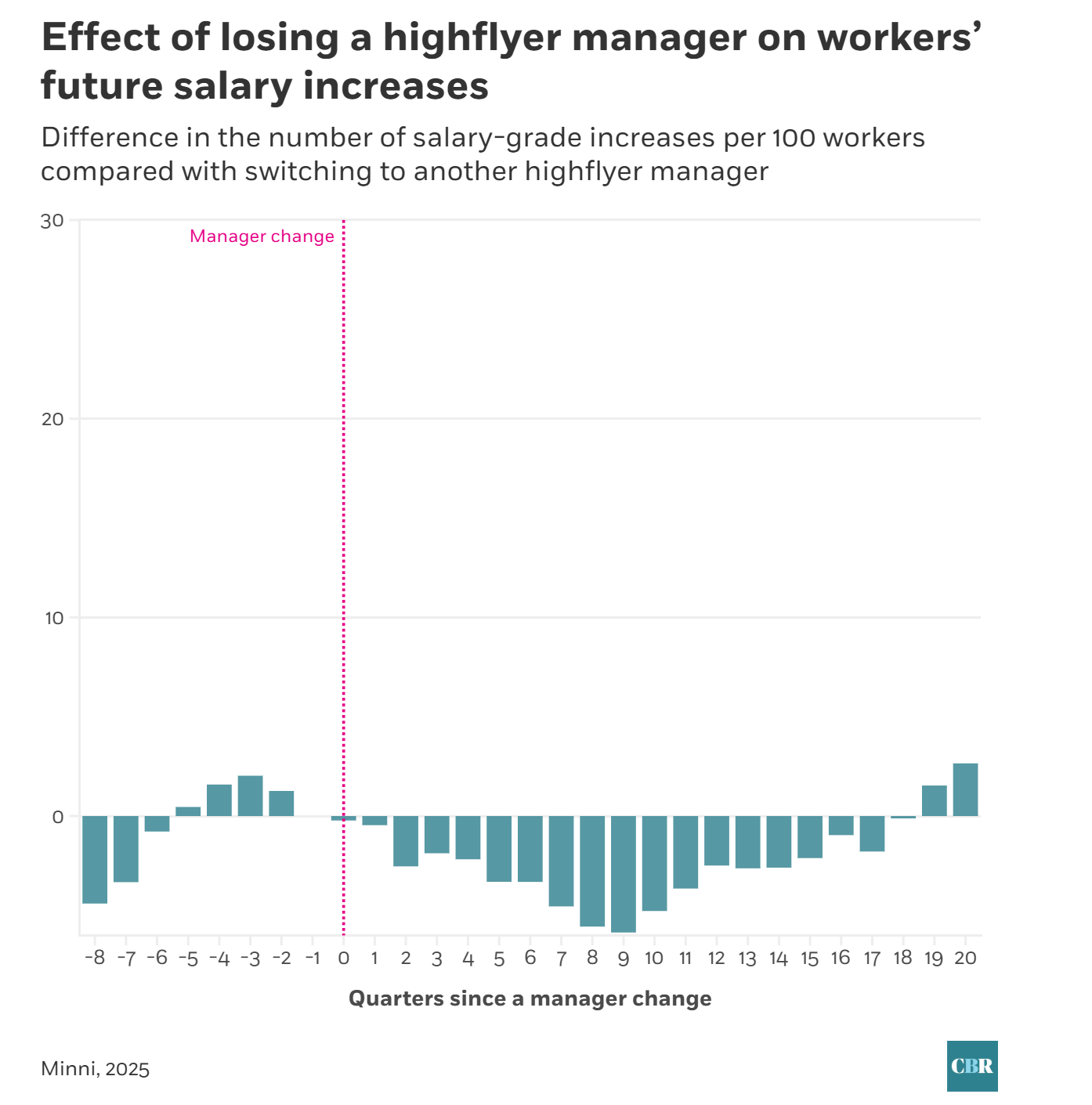
. . . nor was there a meaningful effect on workers’ salary-grade increases. This asymmetry suggests that even a one-time exposure to a highflyer manager can have lasting benefits.