The UNESCO Amman Office, in partnership with the Ministry of Education, officially launched Jordan’s Education Strategic Plan (ESP) 2026–2030, marking a major milestone in the country’s nationally led education reform journey.
As the previous Education Sector Plan (2018–2025) concludes, the new Strategic Plan is grounded in Jordan’s Education Sector Analysis (ESA), following the internationally recognized and widely used UNESCO/IIEP methodology, finalized in March 2025, which examined the education system from early childhood through higher education. Developed through an inclusive and evidence-based process, the ESP sets out a clear roadmap for strengthening quality, equity, inclusion, system resilience, and climate-responsive education across the Kingdom.
The new plan is strategically anchored in Jordan’s Economic Modernization Vision, which positions education at the center of human capital development and sustainable growth. It also advances Sustainable Development Goal 4, reaffirming Jordan’s commitment to inclusive, equitable, and quality education with lifelong learning opportunities for all.
The launch of the Education Strategic Plan 2026-2030 in Jordan is an important national milestone, through which we emphasize that education remains at the forefront of our nation's priorities, and that investing in the Jordanian people is the strategic choice we will not abandon. The Plan’s launch is within a comprehensive national framework, stemming from the Economic Modernization Vision, and based on royal directives that affirm education is fundamental to shaping empowered Jordanian citizens, and the main driver for modernizing the state and enhancing its competitiveness, through investment in human capital and building a sustainable economy of knowledge.
Developed through an inclusive and consultative process, the ESP brought together the Ministry of Education, the UNESCO International Institute for Educational Planning, education directorates, development partners, and national stakeholders. The Advisory Planning Committee endorsed the final document on 14 January 2026, reflecting broad ownership and alignment.
As the grant agent for part of the Global Partnership for Education System Capacity Grant, UNESCO led the finalization of the ESA, provided the technical support for the ESP, and developed the partnership compact. Technical assistance from UNESCO and partners also strengthened monitoring and evaluation systems, improved data quality and reporting processes, and completed the localization of the Education Management Information System (EMIS), ensuring more reliable evidence for decision-making. The development of the new ESP 2026–2030 was co-funded by the MPTF partners, including Canada, Italy, Switzerland, and Norway, through NORCAP, under the System Strengthening Partnership Programme. This long-term partnership has strengthened the education system’s ability to plan, deliver, and adapt to evolving challenges.
The launch of Jordan’s Education Strategic Plan 2026–2030 marks a significant step toward a future-ready, inclusive, and resilient education system. Fully embedded in Jordan’s Economic Modernization Vision and aligned with Sustainable Development Goal 4, this Strategy positions education as a driver of growth, human capital development, and social cohesion. On behalf of UNESCO, I reaffirm our unwavering commitment to support the Ministry and partners as we move from planning to action, ensuring that every learner can thrive.
Jordan’s Education Strategic Plan 2026–2030 reflects the strength of rigorous sector analysis combined with inclusive national dialogue. Built on comprehensive evidence and a highly consultative process, the Plan provides a coherent and realistic roadmap for implementation. IIEP is proud to support Jordan in strengthening planning capacity and advancing sustainable, system-wide reform aligned with national priorities and global commitments.
The ESP 2026–2030 outlines strategic priorities that include enhancing foundational learning, institutionalizing inclusive and gender-responsive approaches, advancing digital transformation, strengthening teacher professional development, and introducing green education standards and climate-responsive practices across schools.
The Education Strategic Plan 2026-2030 is the result of an evidence-informed and nationally led process, guided by strong consultation and technical dialogue. We commend the Ministries for advancing a plan that places inclusion, gender equality, and equitable access at its core, while aligning clearly with Jordan’s Economic Modernization Vision. This shared roadmap provides a strong foundation for coordinated implementation across the sector.
The Strategic Plan sets out a coherent, whole-of-system approach spanning early childhood through higher education, with a clear theory of change and measurable results. Its focus on foundational learning, digital transformation, and stronger pathways to skills and employment reflects the priorities that matter most for young people’s futures and for Jordan’s continued development.
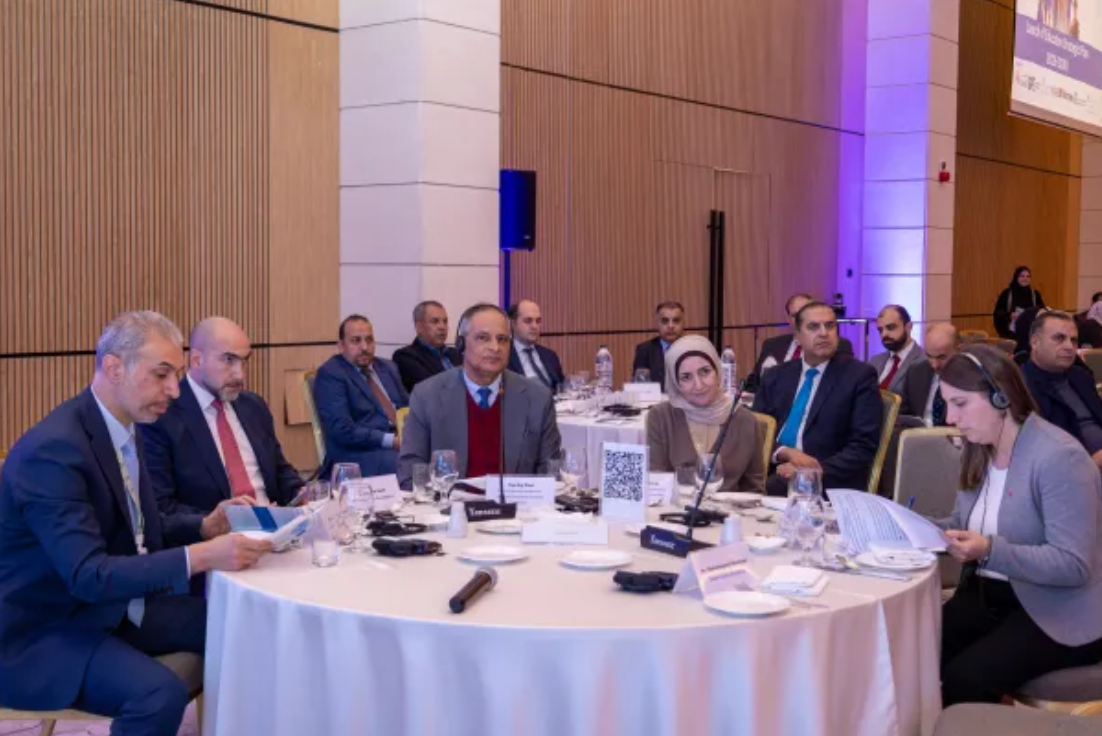
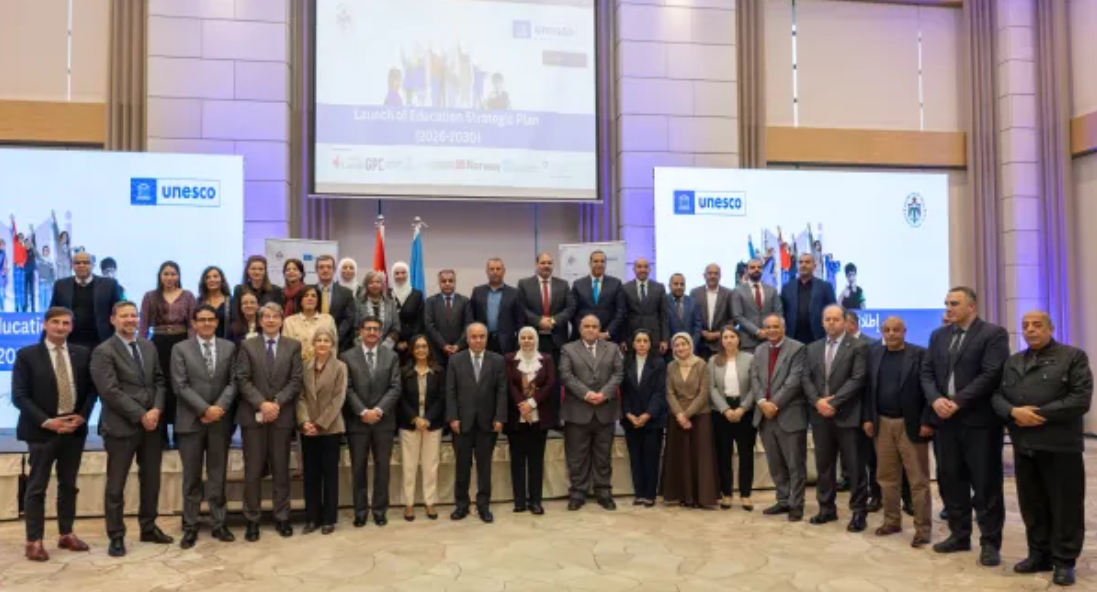
The launch event brought together senior government officials, development partners, representatives of international organizations, civil society, and education practitioners, underscoring the shared commitment to advancing a coherent, evidence-driven reform cycle under national leadership.
With implementation set to begin in 2026, the Education Strategic Plan 2026–2030 will guide coordinated action, resource allocation, and monitoring efforts across the sector. It represents a renewed commitment to ensuring that all learners in Jordan have access to inclusive, high-quality, and future-ready education.