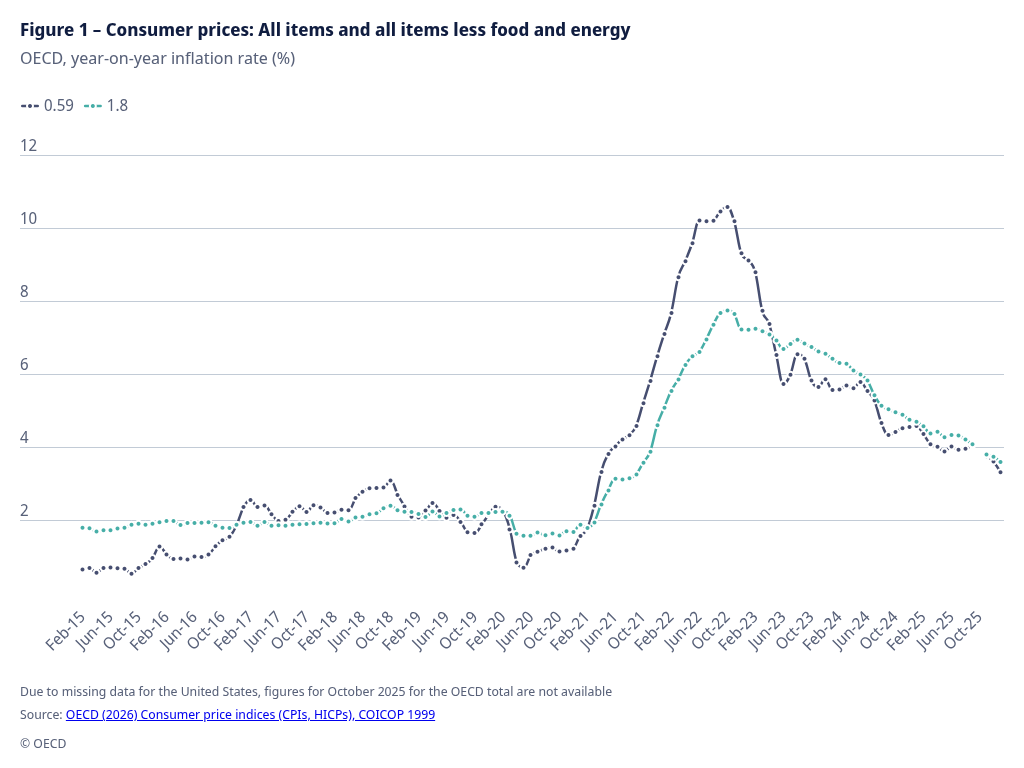
Year-on-year headline inflation in the OECD as measured by the Consumer Price Index decreased to 3.3% in January 2026, from 3.6% in December 2025.
Download in PDF (data tables included)
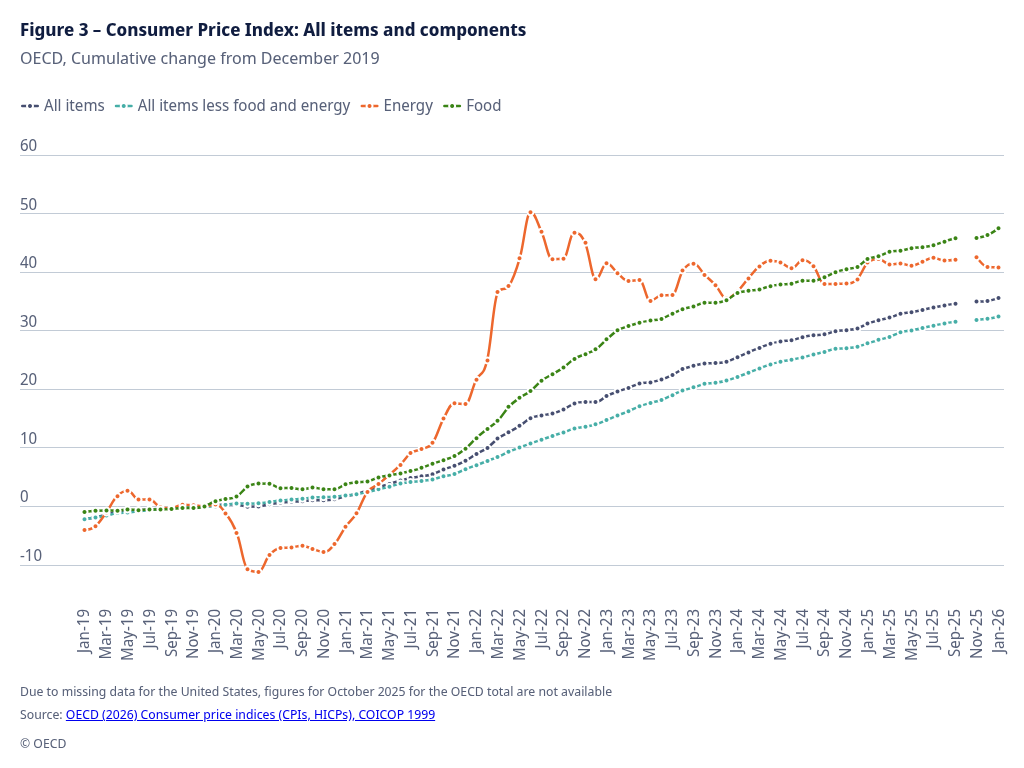
Year-on-year headline inflation in the OECD as measured by the Consumer Price Index (CPI) decreased to 3.3% in January 2026, from 3.6% in December 2025 (Table 1 and Figures 1 and 2). Headline inflation declined in 22 of the 35 OECD countries with data available, remained stable or broadly stable in 8, and rose in only 5. Compared with December 2025, the number of OECD countries with inflation at or below 2% rose from 9 to 15. Despite the recent slowdown in headline inflation, average price levels across the OECD stood 35.6% higher in January 2026 than in December 2019, before the onset of the COVID-19 pandemic (Figure 3).
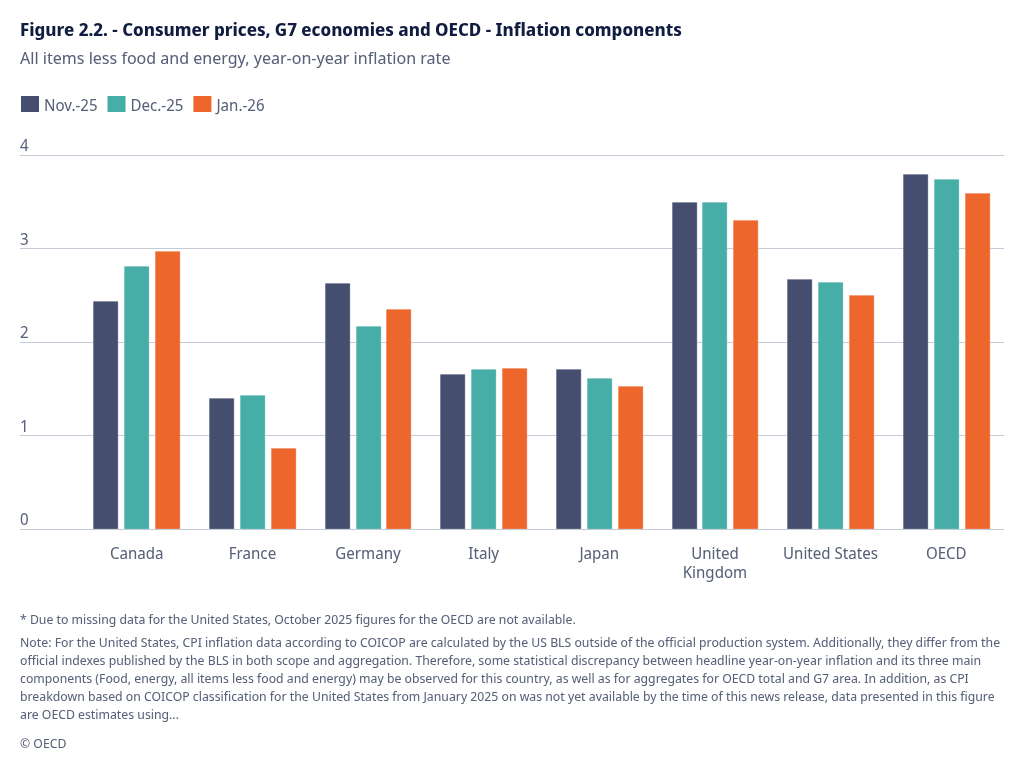
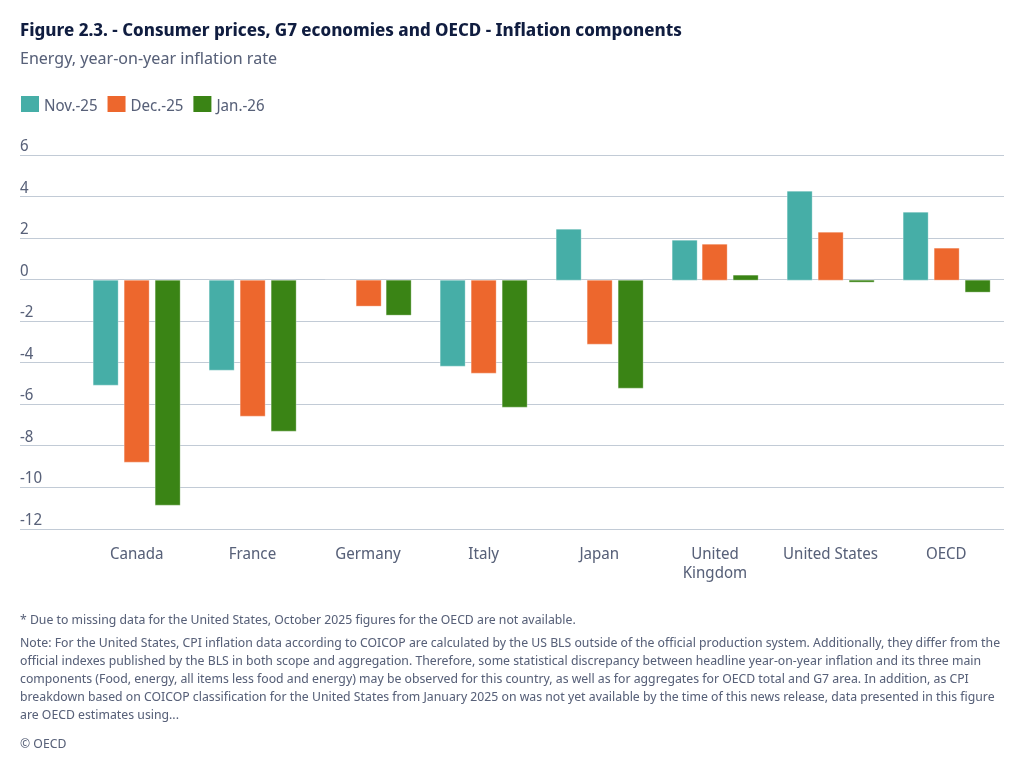
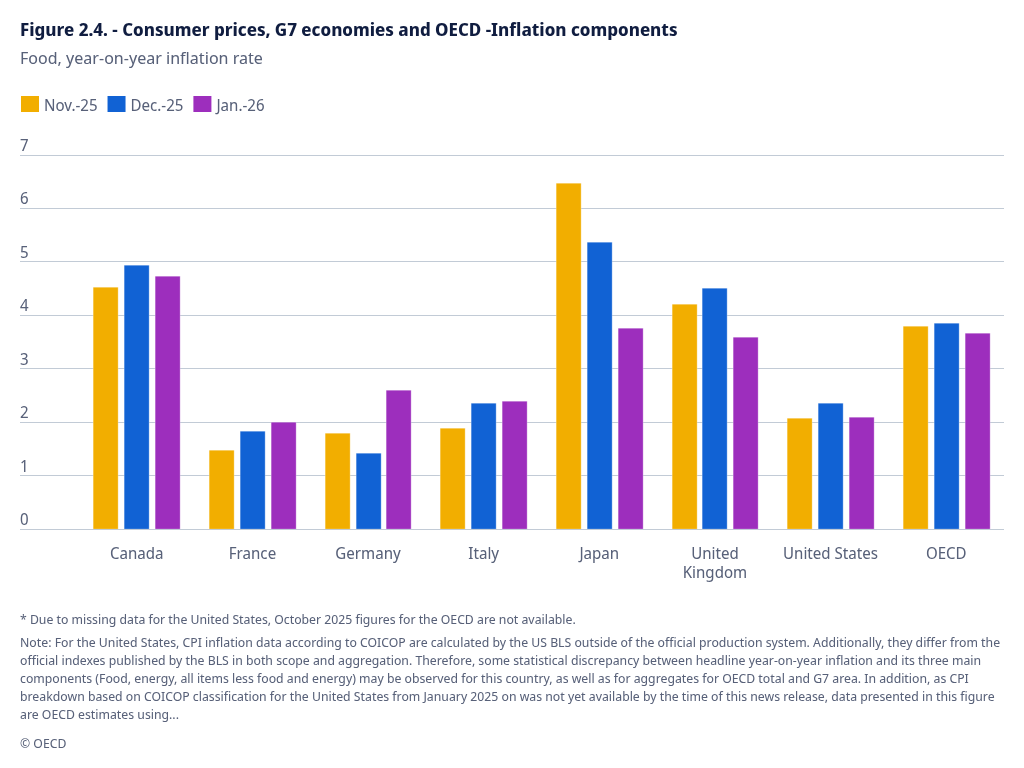
OECD energy inflation fell by 2.1 percentage points (p.p.) in January 2026 to reach minus 0.6%, its first negative value since May 2025. Food inflation also declined, by 0.2 p.p. Despite these January decreases, energy and food price levels have risen by 40.8% and 47.5%, respectively, since December 2019. Core inflation (inflation excluding food and energy) remained broadly stable in January.
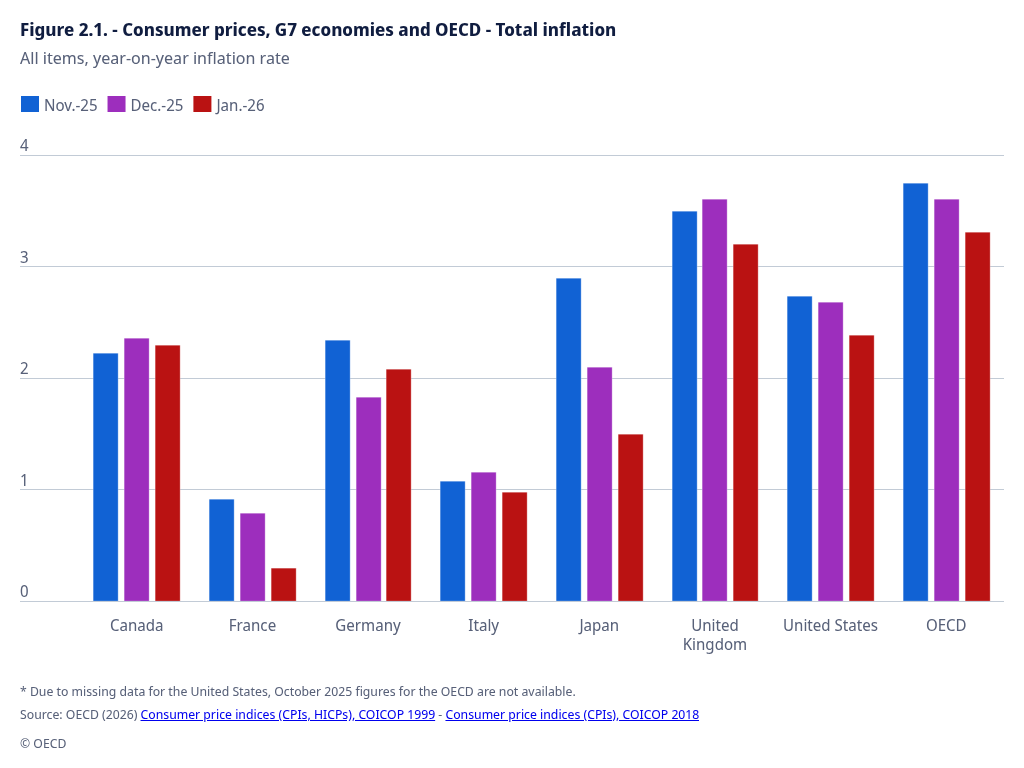
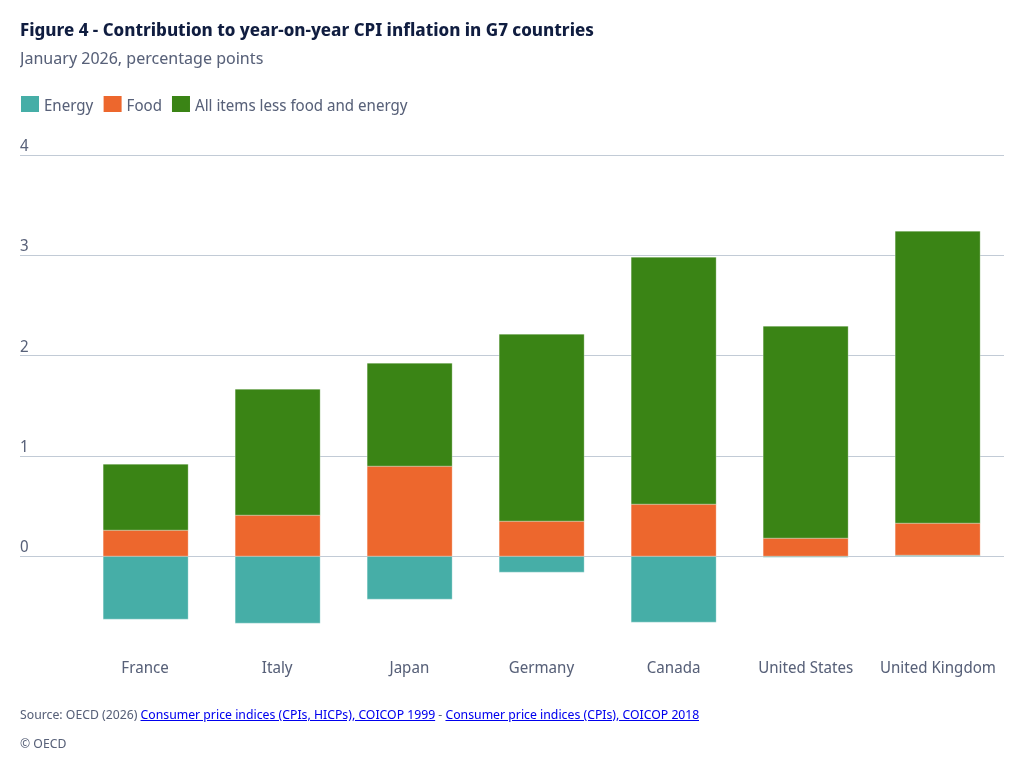
In January, year-on-year headline inflation in the G7 area declined to 2.1%, down from 2.4% in December 2025. France registered the lowest headline inflation in the G7 at 0.3%, a 0.5 p.p. drop from December, due to declines in energy and core inflation. Headline inflation in Japan fell below 2% in January for the first time since March 2022. In the United States, headline inflation also decreased, reaching 2.4%. In contrast, Germany recorded an increase, from 1.8% to 2.1%. Core inflation was the main driver of headline inflation across all G7 countries. This was especially true in the United Kingdom, which remains the only G7 country with headline inflation above 3%, despite a 0.4 p.p. drop (Figure 4).
In the euro area, year-on-year headline inflation as measured by the Harmonised Index of Consumer Prices (HICP) fell further to 1.7% in January 2026, from 2.0% in December. While energy inflation continued to decline, food and core inflation remained broadly stable. Eurostat’s flash estimate for February 2026 points to a rise in euro area headline inflation to 1.9%, driven by increases in core and energy inflation.
In the G20, year-on-year headline inflation declined to 3.4% in January 2026, from 3.6% in December. Among non-OECD G20 economies, headline inflation in China fell to 0.2%, down 0.3 p.p. from January of the previous year, after a year that saw little overall price growth. Inflation also declined slightly in Saudi Arabia and South Africa, while rising in Argentina, India, and Indonesia, and broadly stable in Brazil (Table 2).
Graphs by country
Methodology
Release dates
- Next release: 7 April 2026
- All release dates
Contact us
For further information, journalists are invited to contact the OECD's Media Relations Division on (33) 1 45 24 97 00; others should contact the Statistics and Data Directorate.