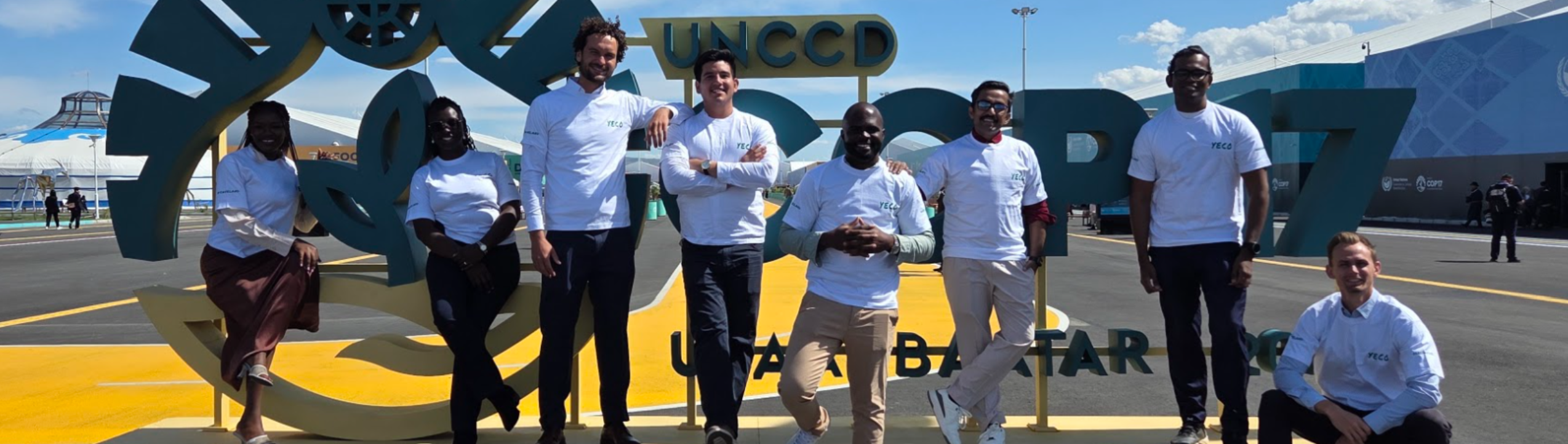
The United Nations Convention to Combat Desertification (UNCCD) or COP17 brought governments, businesses, investors, Indigenous Peoples, local communities and restoration practitioners to Mongolia to discuss how to accelerate action on land degradation, drought and restoration.
For 11 young entrepreneurs from three cohorts of the Youth Ecopreneur Programme (YECO), a joint programme of the International Trade Centre and the G20 Global Land Initiative, it was also an opportunity to bring solutions into these global discussions.
Their businesses range from regenerative agriculture and soil restoration to artificial intelligence and sustainable land management. Learn more about them here.
Bringing experience from the ground into global discussions
For many of the entrepreneurs, one of the strongest takeaways was the opportunity to exchange knowledge with people working on restoration but in very different contexts.
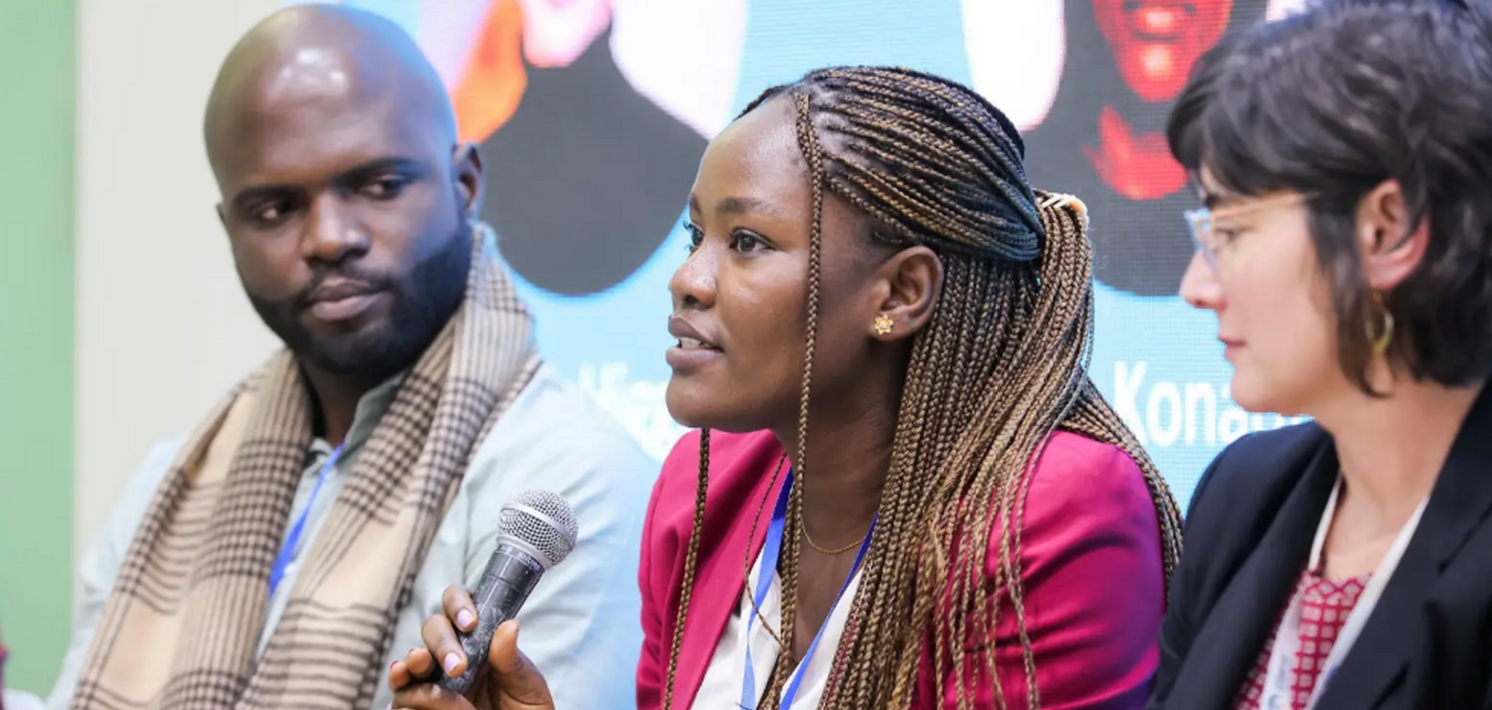
For Lydia Akua Konadu of AgriMercarb, those exchanges led her to rethink her own business.
“We can achieve a lot when people from completely different backgrounds come together to solve a problem. There’s so much happening in the world I had absolutely no idea about, and this is making me think differently about where AgriMercarb can fit into this.”
But the exchange went both ways.
Through speaking opportunities at the Action Dome, the Restoration Forum, discussions with parliamentarians and other sessions across the conference, the young entrepreneurs brought first-hand experience from the communities, ecosystems and markets where they work.
They also contributed to YECO-led discussions including From Challenge to Change: The Business of Land Restoration and From Capital to Scale: Global Business Perspectives on Land Restoration.
One lesson came through clearly: scaling restoration solutions requires more than investment alone. Entrepreneurs also need customers, financing suited to their stage of growth, supportive policies and strong partnerships.
Turning COP conversations into business opportunities
COP17 gave the entrepreneurs access to people they would rarely meet in their day-to-day work.
Several reported potential clients, partnerships and follow-up financing conversations after the conference.
For Lilan Dayananda of Elzian Agro, connections made in Mongolia have already opened discussions around potential soil-testing projects with farming communities in Inner Mongolia.
Others reported emerging collaborations around mine rehabilitation, support for smallholder farmers and opportunities to combine their technologies with the expertise of other YECO businesses.
The strong presence of land-dependent industries, including mining, also highlighted another route to scale. Large companies can become not only funders, but customers and commercial partners for small businesses providing restoration technologies and services.
For restoration entrepreneurs, that means asking not only “Who might invest in my business?” but also “Who could buy my solution?”
Learning and collaborating across the young community
Some of the most valuable exchanges happened within the YECO group itself.
Outside the formal programme, the entrepreneurs compared business models, discussed challenges and explored how their solutions could complement one another.
One participant described the highlight of COP17 as:
“Getting to know the YECOs – learning about their businesses, being real about our challenges, and brainstorming through solutions – and then even talking about partnerships.”
Taking the momentum beyond Mongolia
The entrepreneurs’ voices also travelled beyond the conference rooms. All 11 recorded podcasts, two appeared on Mongolian television, and the launch of the Digital Impact Stories showcased businesses turning restoration challenges into economic opportunities.
By the end of COP17, the YECOs had brought locally developed solutions into global discussions, explored new markets and partnerships, and contributed practical experience to conversations on finance, markets and policy.
UNCCD- COP17 showed that many of the pieces of the restoration economy already exist: entrepreneurs with solutions, businesses with restoration needs, investors looking for opportunities and policymakers shaping the frameworks around them.
The challenge now is connecting those pieces.
The Youth Ecopreneur Programme is a joint initiative of the International Trade Centre and G20 Global Land Initiative-UNCCD, implemented in partnership with World Intellectual Property Organization, Sidley Austin LLP, Google Startup for Sustainable Development and EY.
Interested in being part of the next cohort? Register your interest via the link.