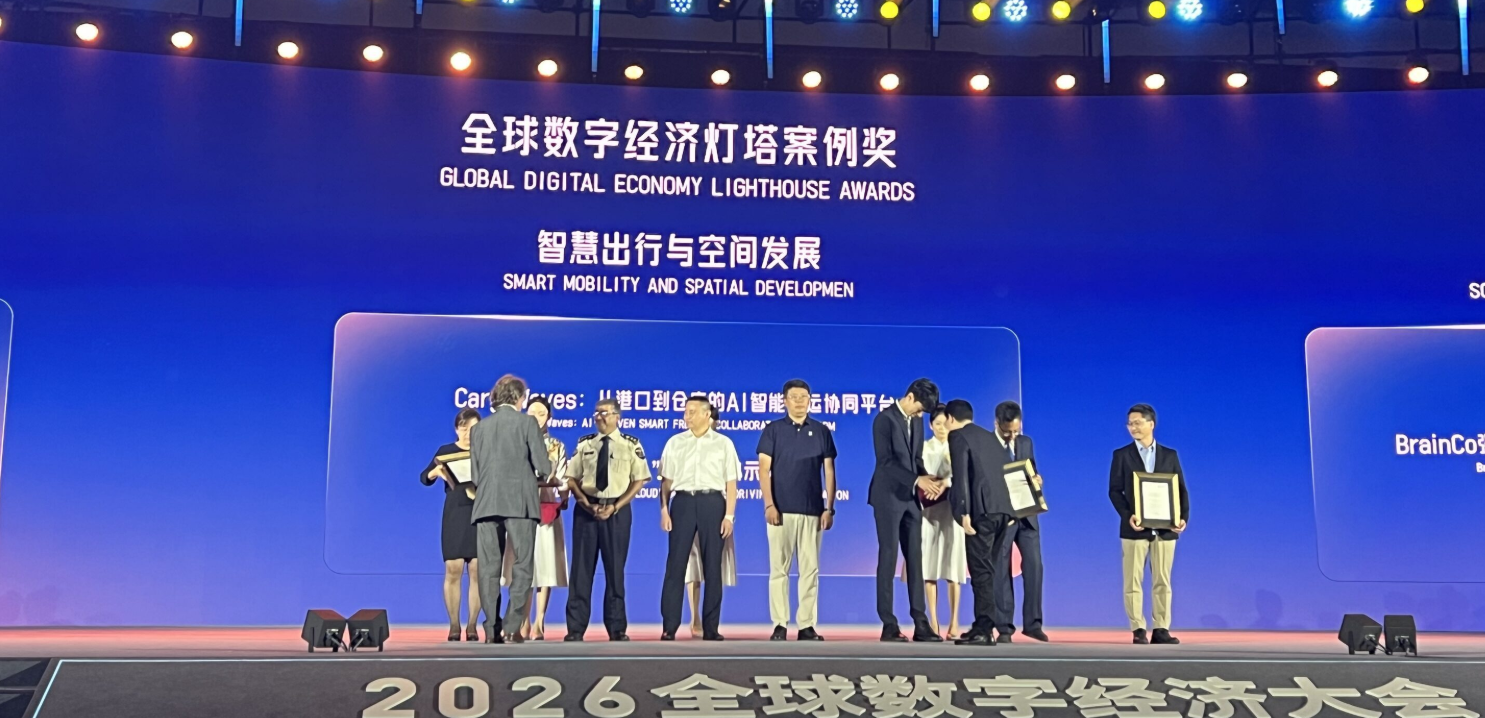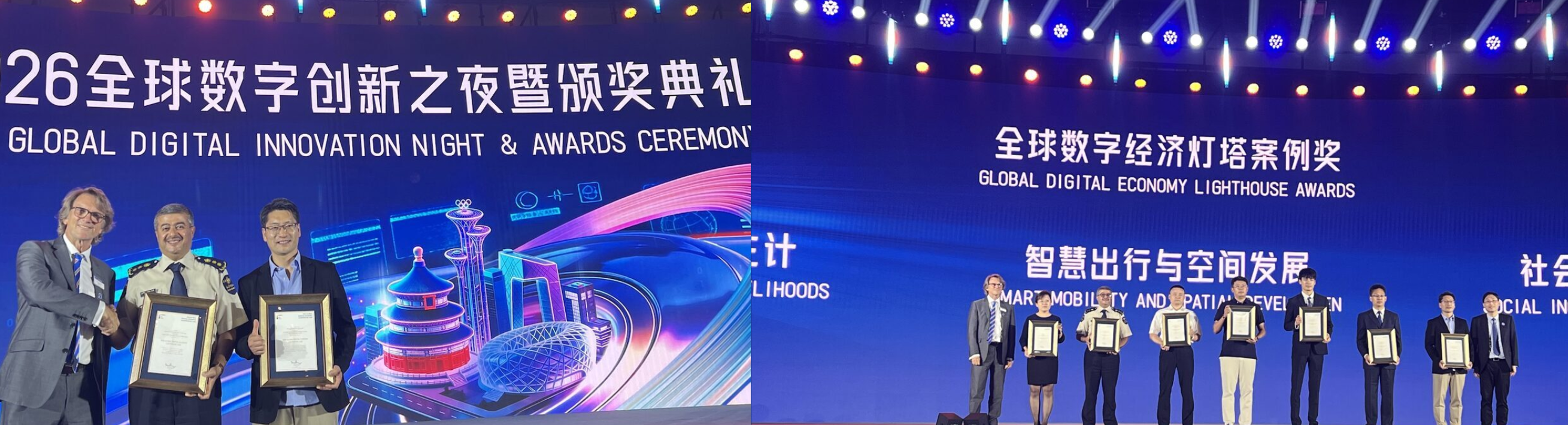
A customs data platform built with ITC is among the first winners of a new global award for digital tools that deliver measurable development results.
Jordan’s Trade and Logistics Performance Gateway has been named as one of the first Global Digital Economy Lighthouses, selected from 308 applications across more than 60 countries.
The award was announced on 2 July at the Global Digital Economy Conference in Beijing.
The Lighthouse initiative was launched by the International Trade Centre (ITC), the International Telecommunication Union and the Global Digital Economy Cities Alliance. It looks for digital tools that have already proved themselves in their home context and could guide other countries facing similar problems.
Implemented by Jordan Customs and ITC, with a wide network of public and private institutions and support from the German development agencies BMZ and GIZ, the Gateway shows what practical digital transformation looks like in trade.
It is not simply a data platform. It is a reform tool: consolidating data from more than 40 public and private institutions, turning over one billion records into more than 1,500 real-time indicators and 450 interactive dashboards.
That matters because customs authorities and border agencies can only spot bottlenecks that they can see. Now they can see bottlenecks as they occur, prioritize reforms, monitor the impact of interventions, and improve accountability.
For businesses, it points to faster, simpler and more predictable trade procedures that can reduce delays and costs. At the launch of the Gateway in Aqaba, officials said it was a step towards a more integrated digital trade and logistics system, strengthening Aqaba’s role as a regional logistics hub.
Digital transformation is most valuable when it solves concrete problems: moving goods faster, making procedures more transparent, helping government and business coordinate, and giving smaller firms confidence in cross-border trade.
The Jordan Gateway is a strong example of ITC’s role in connecting technical innovation with institutional reform and business competitiveness.
The partnership behind the award reflects the same logic. The Global Digital Economy Cities Alliance, known as DEC40, was launched at the 2025 conference in Beijing. The city's municipal government worked with around 40 cities across Europe, North America, Asia-Pacific, the Middle East and Latin America. Its aim is to narrow the digital divide by helping cities, enterprises, international organizations and researchers share what works rather than start from scratch.
This year’s conference, under the theme ‘Inclusive Intelligence, Borderless Connectivity,’ brought together governments, businesses, academia and international organizations around digital-friendly development, AI, digital governance, industrial transformation and inclusive services. The Lighthouse programme was one of its first concrete outcomes, with the selected cases poised to be adapted in other countries.
The breadth of the Lighthouse cases also shows how quickly artificial intelligence and advanced digital technologies are moving from experimentation to practical impact. In trade, the Jordan Gateway uses real-time data intelligence to make logistics systems more responsive. In social inclusion, smart prosthetics developed by Hangzhou-based BrainCo – a case nominated by ITC – read muscle and nerve signals and use AI to recognize intended movements, allowing people who have lost limbs to grasp, hold and pinch again.
These examples point to the next frontier of digital development. AI and data technologies are not only about productivity or automation. They can make trade systems more transparent, public services more responsive, cities more inclusive, and assistive technologies more empowering. ITC ensures that these solutions are not isolated showcases, but part of a wider effort to bring these digital practices to work for developing countries, small businesses and underserved communities.
For ITC, the Jordan award is more than a recognition of one successful project. It is a lighthouse for our wider digital agenda: practical, partnership-based, measurable and inclusive.
All the lighthouses
The initiative is a global case selection and recognition programme established under the framework of the United Nations Global Digital Compact. It is implemented by the Global SDGs and Leadership Development Center. Here's the full list of lighthouses:
Digital urban governance
Beijing's Jingban smart government collaboration platform integrates government operations across all 16 districts and 114 municipal agencies. It has maintained zero cybersecurity incidents over four years while supporting 29 major events, including the Beijing Winter Olympics. The platform demonstrates the resilience of digital infrastructure in managing complex mega-city operations.
Jakarta's JAKI Super App has reduced citizen complaint submission times from one day to just two to three minutes. It also transforms digital inclusion gaps into transparent governance indicators that can be publicly monitored.
Madrid's Digital Capital initiative has established the MAIA Responsible AI Framework under the EU AI Act. Citizen participation in digital public services has increased from 14% to 83%.
Inclusive digital public services
Beijing's unified online hospital appointment platform now connects 307 hospitals and serves more than 27.95 million registered users. It saves approximately RMB 200 million annually by reducing unnecessary repeat examinations while creating around 3.75 million additional effective medical appointments each year.
The European Organization for Nuclear Research (CERN) developed the CAFEIN Federated Privacy Computing Platform, which enables collaborative AI without transferring sensitive data across institutions. The platform has already been validated in six application areas, including brain MRI screening, stroke risk management and cancer prevention. It offers a practical solution to one of the key global challenges in AI: balancing data privacy with collaborative innovation.
Green and resilient cities
Istanbul's IBS Smart Firefighting System integrates 4,583 firefighters across 133 fire stations. In 2024, it responded to 24,948 fire incidents and rescued 10,738 people, achieving an average response time of six minutes and 46 seconds. The system has demonstrated strong resilience under the combined risks of earthquakes and urban fires.
Digital economy and local livelihoods
Zhipu AI's GLM Foundation Model supports more than 40 mainstream chip platforms and has open-sourced over 60 frontier AI models, attracting more than 100 million downloads. It delivers performance comparable to leading closed-source models at approximately one-sixth of the cost.
SANY Intelligent Manufacturing has transformed factory management by replacing experience-based decision-making with machine-driven intelligence, increasing inventory turnover by 376.5%.
Jordan's Trade Performance Gateway converts over one billion trade records into more than 1,500 real-time key performance indicators (KPIs), while supporting a 100% implementation commitment rate under the WTO Trade Facilitation Agreement.
JD Logistics has deployed 24 intelligent "Wolf Warehouses" globally, increasing inbound warehouse efficiency by six to seven times.
Smart mobility
Beijing's Vehicle-Road-Cloud Integrated Demonstration Programme now covers 600 square kilometres and has launched the world's first open-source roadside operating system. Traffic efficiency has increased by 15%.
CargoWaves, an intelligent port logistics platform, has reduced truck booking times by 90% and empty vehicle movements by 30%, improving efficiency across port logistics operations.
Digital inclusion
BrainCo, also recommended by ITC, has reduced the cost of intelligent bionic prosthetic hands to between one-fifth and one-seventh that of comparable imported products. By the end of 2025, nearly 10,000 people with limb disabilities had benefited from the technology.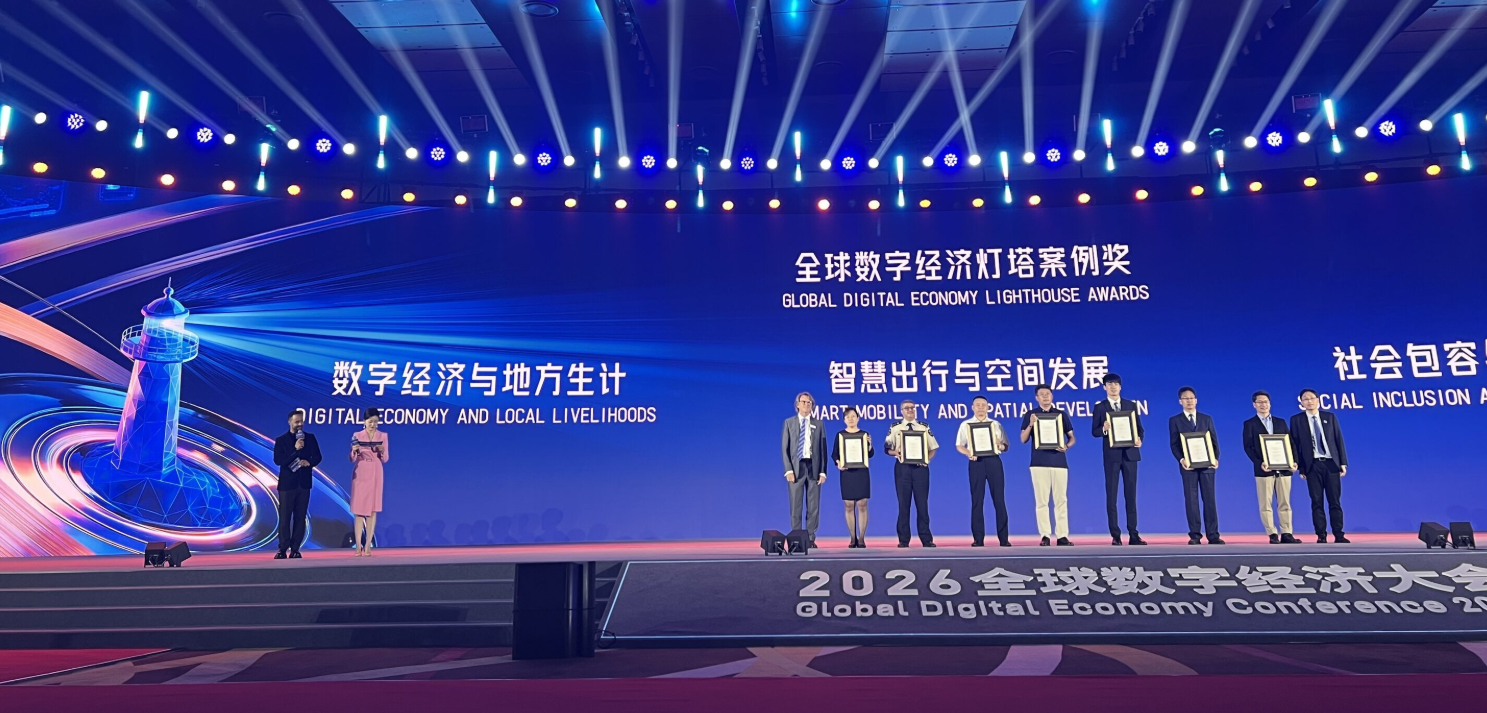
22 July 2026, Beijing, China – The Jordan Gateway is a strong example of ITC’s role in connecting technical innovation with institutional reform and business competitiveness. Photo by ITC