Highlight
Trade policy is becoming more interventionist. Tariffs are rising again, but they are not the main obstacle for most countries’ exports.
Non-tariff measures (NTMs) such as regulations, mandatory standards or product requirements, now drive most trade costs. They shape who trades, what is traded and to which markets.
For developing countries, this creates a double burden. They face higher tariffs while also trying to meet increasingly complex rules.
NTMs outweigh tariffs for most countries
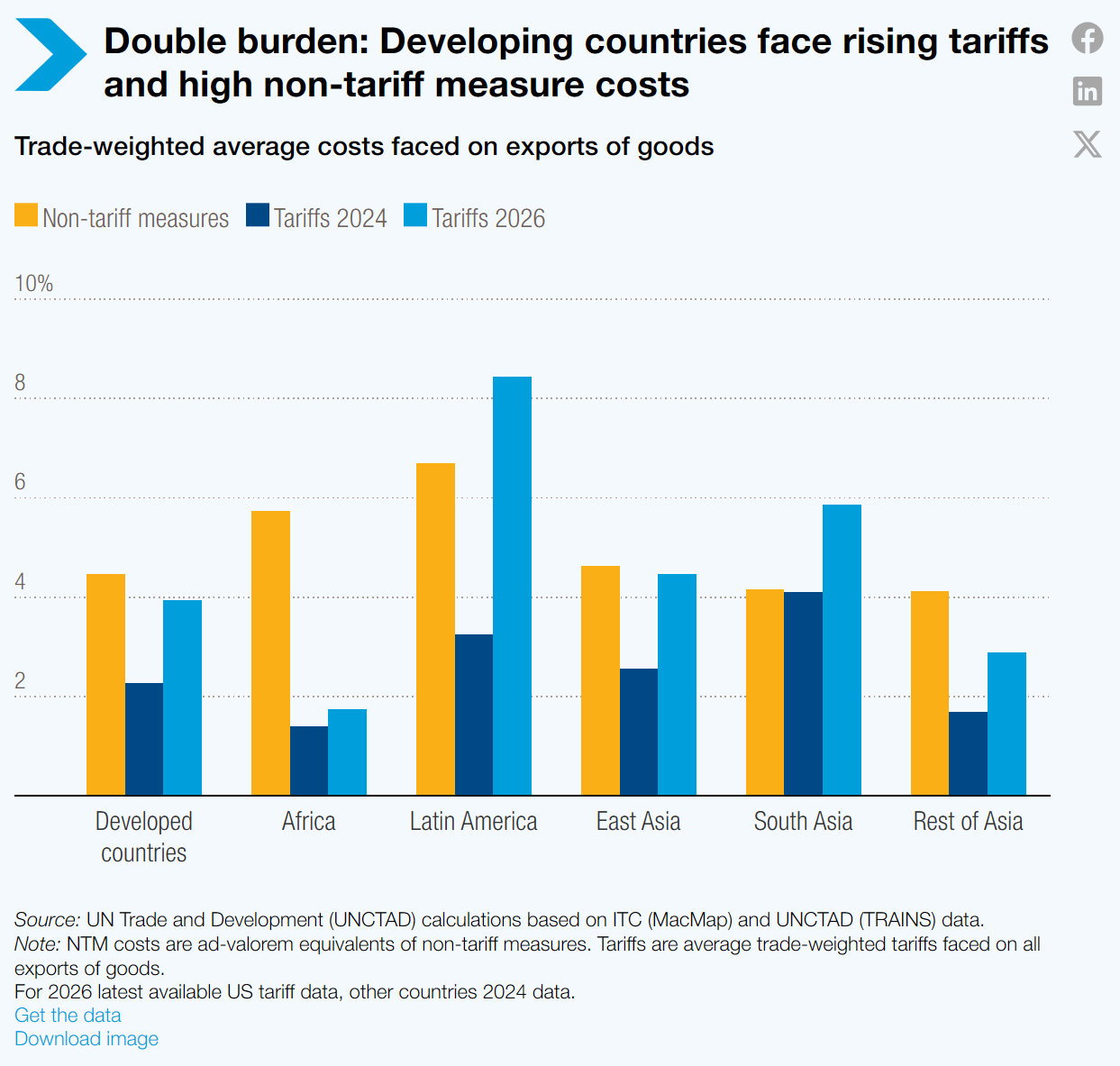
Tariffs increased sharply in 2025. They rose by 10% for developed countries, 16% for developing countries and 18% for least developed countries.
Even so, tariffs are not the main cost for most countries. NTMs impose higher export costs than tariffs for 88% of countries. They include technical regulations, health and safety requirements, and administrative procedures. They often involve compliance, information and procedural costs.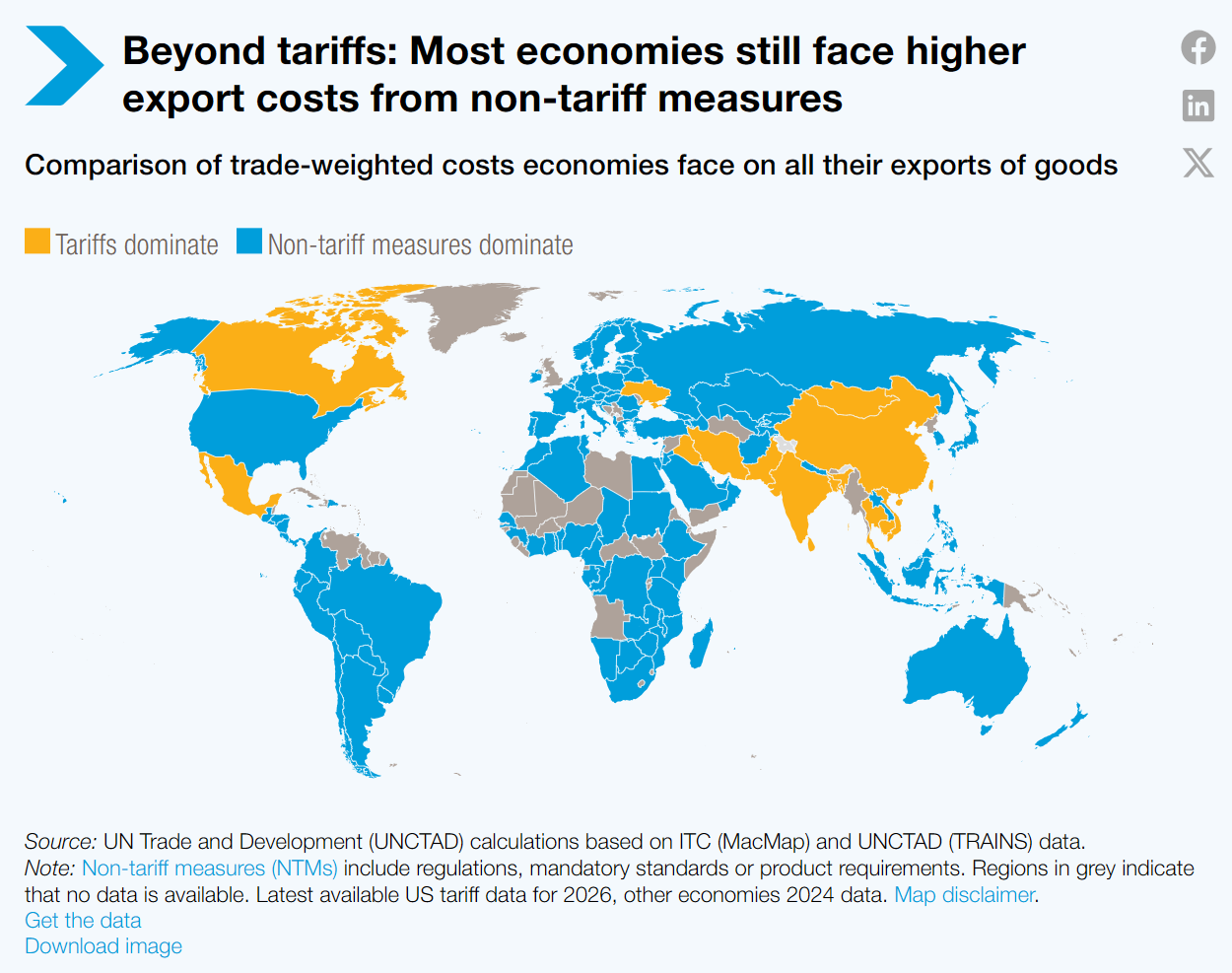
NTMs are a central part of recent trade agreements. Negotiations now focus more on aligning rules, recognising standards and simplifying procedures, rather than cutting tariffs.
Developing countries face a double burden
The burden of NTMs is uneven. Developing countries and least developed countries face the highest costs. They are affected by both rising tariffs and complex regulatory requirements.
- Tariffs on exports from regions such as South Asia and Latin America nearly doubled.
- Least developed countries lose about 10% of their exports to G20 markets because they cannot meet NTM requirements.
Smaller exporters face greater challenges due to limited technical and financial capacity.
Compliance can be costly. When testing or certification is not available locally, exporters may need to send products abroad.
Transparency can significantly reduce trade costs
The challenge is not only the measures themselves. It’s also how difficult they are to find and understand.
Lack of transparency acts as a hidden trade barrier. Firms often struggle to know which rules apply to their products.
- Improving transparency can reduce NTM-related trade costs by around 19%
- When measures are not notified, costs can be similar to a 28% tariff
- These hidden costs can exclude smaller firms from global markets
Tools already exist to improve access to information, including global databases on NTMs. Expanding and updating these tools can help reduce unnecessary costs.
Regulatory cooperation can unlock major gains
Differences in regulations across countries create extra costs. Producers often need to meet different requirements for each market.
Aligning rules or recognising standards can reduce these costs significantly.
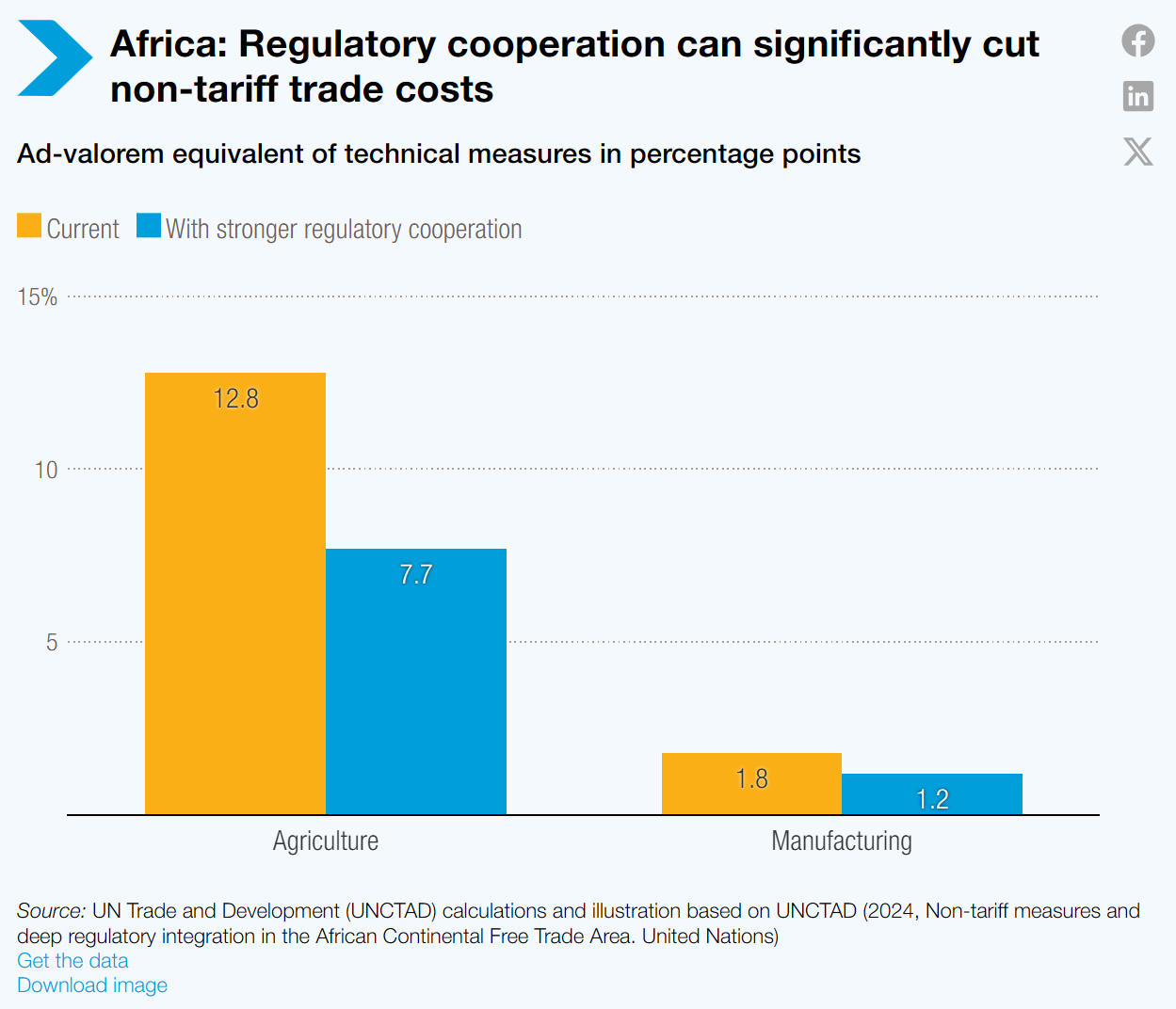
- Regulatory convergence can cut NTM-related costs by 15-30%
- In Africa, even limited cooperation could reduce costs by 30-40% in sectors such as agriculture and manufacturing.
This is especially important for trade between developing countries. Weak transparency and fragmented rules still limit these trade flows.
Reduce costs while preserving essential measures
NTMs serve important public policy goals, including health, safety and environmental protection. They can’t be simply negotiated away.
The priority is to reduce unnecessary costs while keeping these protections in place.
- Improving transparency can make rules easier to understand.
- Strengthening regulatory cooperation can reduce duplication.
- Targeting support can help developing countries meet requirements.
Without these steps, NTMs risk reducing the benefits of tariff liberalization and limiting the ability of developing countries to benefit from global trade.
Downloads