Aligning tariffs, standards and supply chains are key to scaling sustainable alternatives and reducing dependence on fossil fuel-based materials.

© UN Trade and Development (UNCTAD)/Maria Durleva | Plastic nurdles – small pellets made from fossil fuels or recycled plastics – are used as the raw material for most plastic products worldwide.
When oil prices surge, the impact goes far beyond fuel. It runs through global trade – embedded in plastics, packaging and synthetic fibres that underpin modern supply chains.
Following the military escalation in the Middle East on 28 February 2026, crude oil prices jumped from $69 to $113 per barrel. Fertilizer costs rose quickly. Less visible, but just as significant, was the knock-on effect on plastics.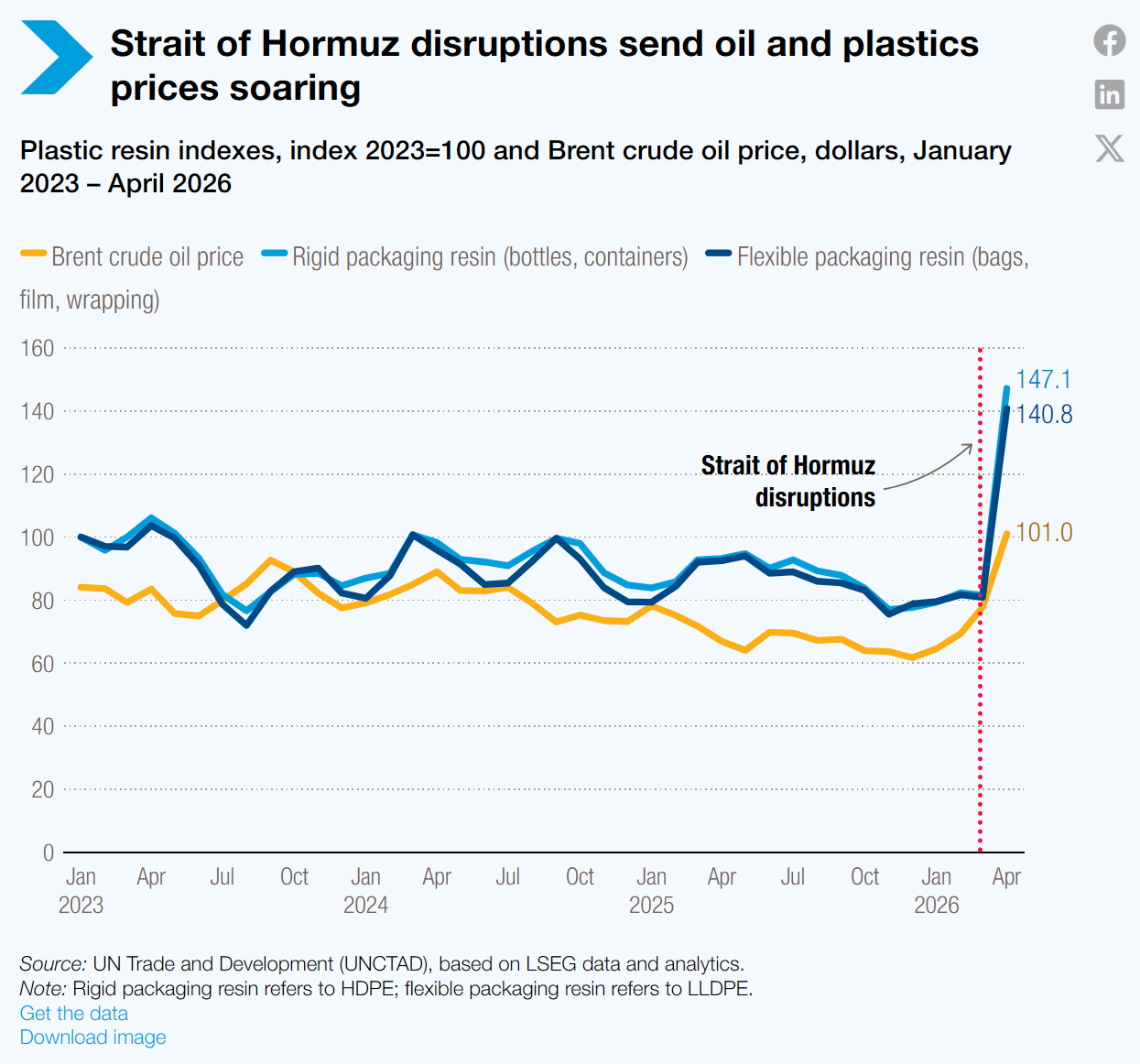
Price of Polyethylene resin – rigid flexible widely used in packaging, rose by an estimated 70-80% in European spot markets between February and April 2026. Over the past 25 years, similar oil shocks have repeatedly driven up the cost of fossil fuel-based materials across value chains.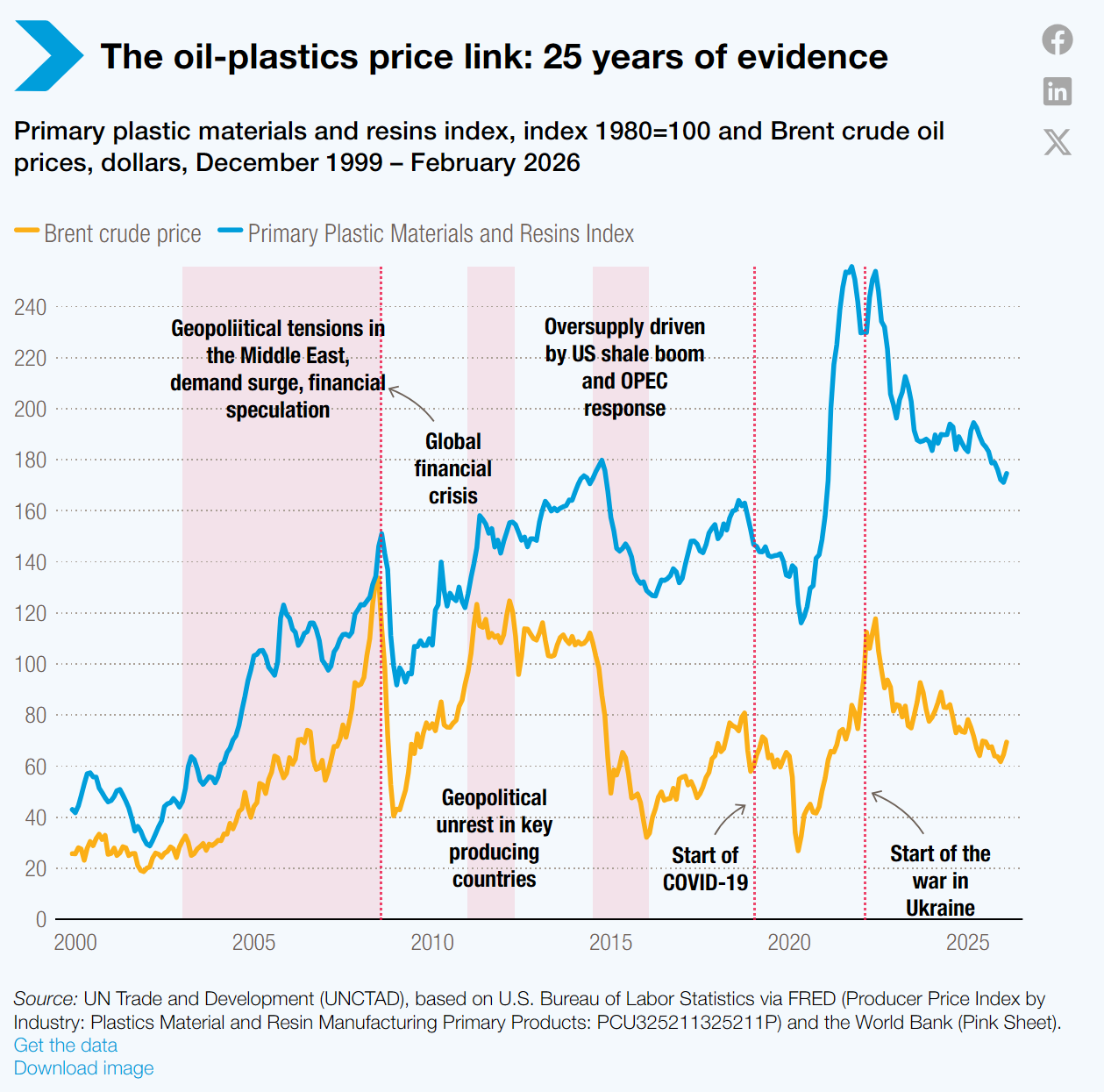
Trade barriers slow the shift to non-plastic substitutes, and cost of transition
The countries most exposed to these price increases are often the same ones producing viable, natural and environmentally friendly substitutes to plastics.
Natural materials such as seaweed, pineapple and banana fibre – largely sourced in developing economies – offer viable substitutes for fossil fuel-based plastics. Yet they face significantly higher trade barriers.
UN Trade and Development (UNCTAD) analysis shows tariffs on plastics have fallen to 7.2%, while natural substitutes face average tariffs of 14.4%. This imbalance limits the ability of developing countries to scale production and compete globally, while raising the cost of transition.
“Plastic packaging costs have spiked,” said CEO Balasaheb Gavane of a Tanzanian company working with the UK-UNCTAD SMEP Programme.
“Alternatives exist, but without reliable supply, clear standards and competitive pricing, switching at scale remains difficult.”
Fragmented regulations add to the challenge. Gaps in national frameworks and inconsistent international standards – including within systems such as the Codex Alimentarius – increase compliance costs and create barriers to trade.
Seaweed illustrates the problem. Although abundant in many coastal developing countries, it remains under-regulated in global trade, complicating efforts to scale production and access markets.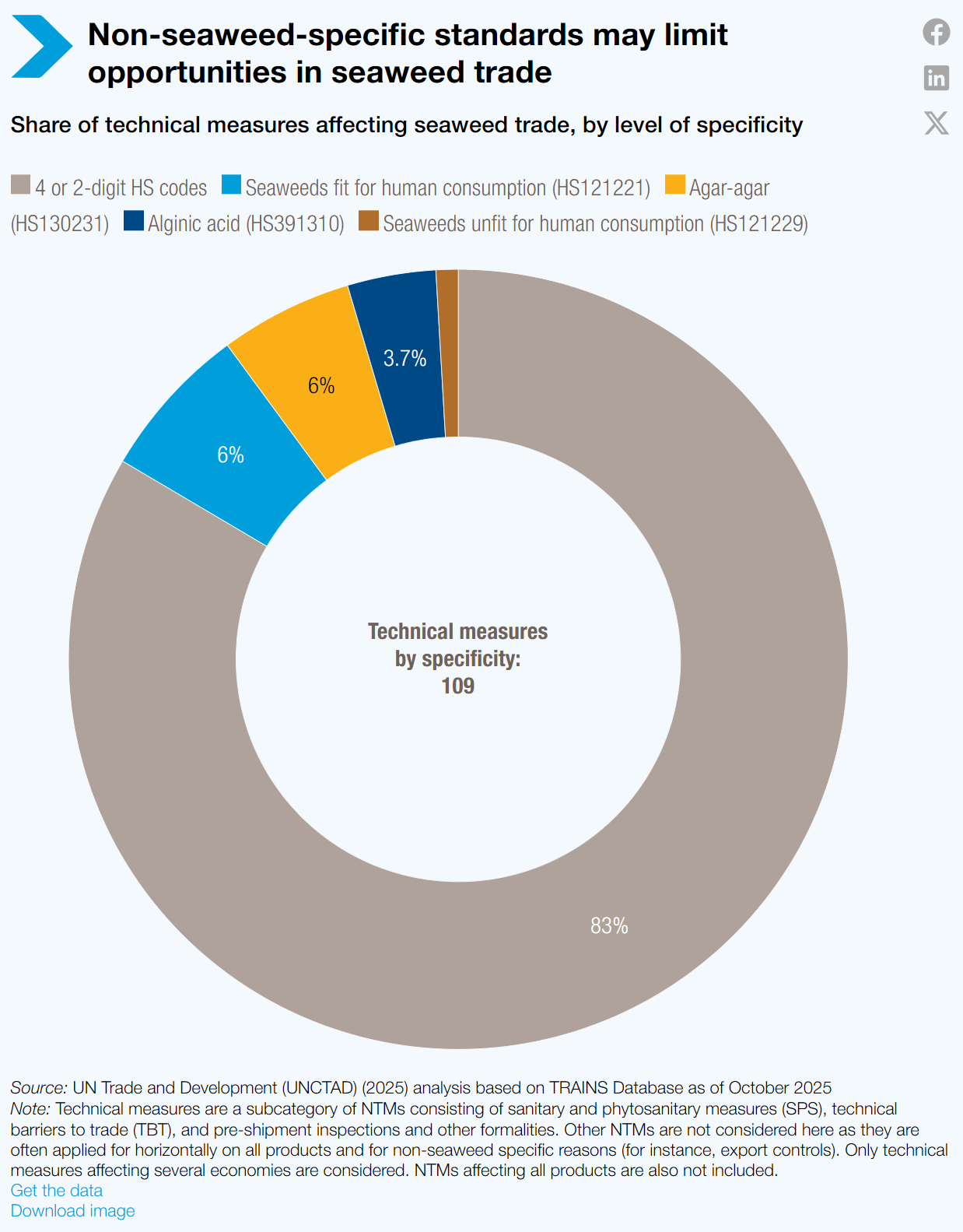
Textiles face similar pressures
Around 60% of global textile production is based on fossil-fuel-derived synthetics such as polyester, generating textile waste and estimated 9% of ocean microplastic pollution.
Natural fibres offer lower-impact alternatives but remain less competitive due to cost and market access constraints.
“Demand is growing, but supply chains are not yet structured to move these materials efficiently,” said Dr. Muzzamal Hussain of the National Textile University of Pakistan.
A policy window for change
Current price volatility is exposing structural gaps in how global trade treats fossil-based materials and their alternatives.
UNCTAD supports efforts to address these issues through its work on trade and environment, including engagement in discussions at the World Trade Organization and negotiations towards a global plastics treaty.
Aligning tariffs, improving standards and strengthening supply chains will be critical to enabling developing countries to move up value chains, make sustainable alternatives viable at scale, and lowering the cost to green transitions.