
Entrepreneurs, policymakers and businesses leaders from across Central Africa met in Yaoundé to turn regional trade rules into real opportunity. The Public-Private Dialogue come just ahead of the World Trade Organization Ministerial Conference.
More on the WTO Ministerial Conference (MC14)For women and young entrepreneurs in Central Africa, selling services across borders, whether in transport, finance, or technology, has long meant navigating a tangle of inconsistent rules, limited financing, and patchy infrastructure. The dialogue held in Yaoundé on 23 March set out to change that.
Around 80 entrepreneurs, joined by policymakers and business representatives from 11 countries, spent the day working through what the African Continental Free Trade Area (AfCFTA) could mean for them in practice. They left with a shared set of priorities: better roads and digital infrastructure, easier cross-border payments, and clearer, more consistent rules for service providers.
The landmark AfCFTA agreement covers 54 countries, and incorporates regional groups like the 11-member Economic Community of Central African States (ECCAS). Protocols on Services and on Women and Youth supplement the agreement.
Tools to grow Central African trade
The AfCFTA Protocols on Services and on Women and Youth provide special provisions to support their businesses. The dialogue also looked at the Pan-African Payment and Settlement System (PAPSS), which eases cross-border payments.
The International Trade Centre (ITC) presented the SheTrades Outlook, an online tool that assess the policy environment for women in trade, and the Ye! Community, which helps youth entrepreneurs to build scalable and sustainable businesses.
‘I was truly equipped and enlightened through this dialogue, which allowed me to better understand the compliance requirements necessary to raise our products to international standards,’ said Julie Sipeuwou, who works in the cosmetics.
Achille Bassilekin III, Minister of Small and Medium-Sized Enterprises, Social Economy and Handicrafts, chaired the meeting.
‘In Central Africa we often face the difficulty of seeing young people integrated into initiatives, as policies tend to monopolize everything,’ said Moly Lebayi Onguele, a young entrepreneur from Gabon. ‘Similar ITC initiatives would energize the youth of Central Africa in particular, and the continent more broadly.’
Patricia Ze, SheTrades focal point at the ministry, said each participant had received ‘sufficient information and content to… become even more involved in trade in services, which represents immense opportunities.’
She also called for greater investment in technology, logistics, distribution, financial services, and business services.
ITC organized the dialogue in partnership with ECCAS and with the support of the European Union under its Global Gateway initiative and its ‘corridor’ approach. This meeting also contributed to strengthening dialogue between policymakers and economic actors, while formulating practical recommendations to facilitate access to regional trade in services.
23 March 2026, Yaoundé, Cameroon – The participants, applauding their rapporteur, after the presentation of the results of the group discussions.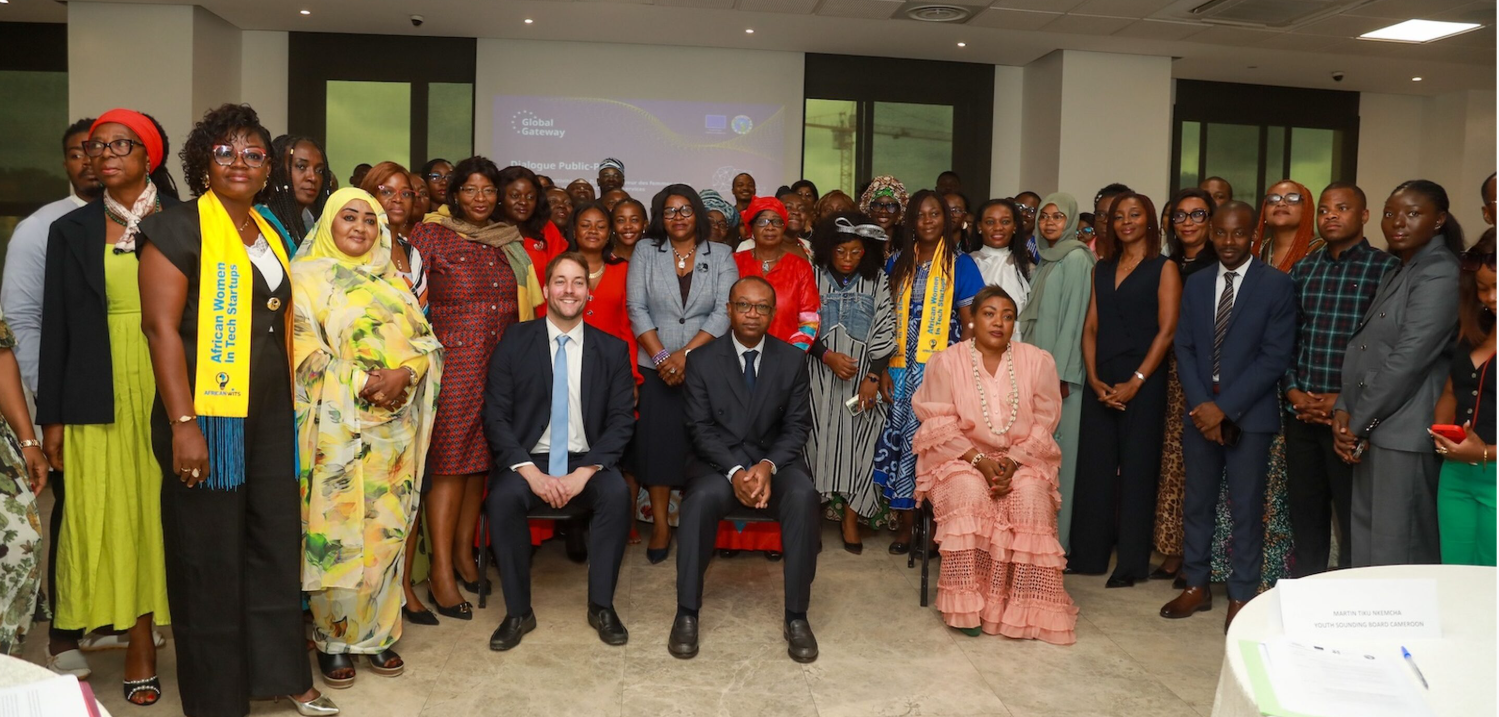
23 March 2026, Yaoundé, Cameroon – Group photo after the first part dedicated to the official opening of the proceedings.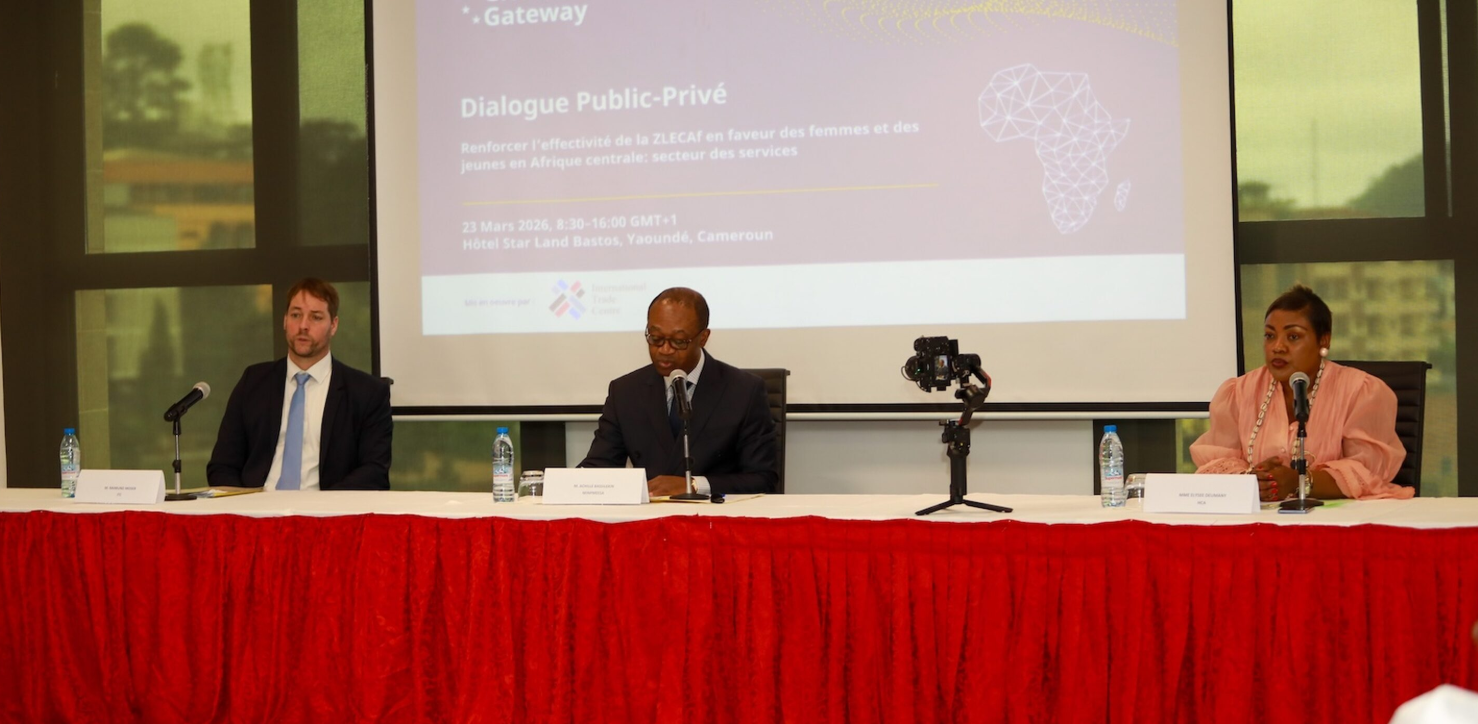
23 March 2026, Yaoundé, Cameroon – A view of the panel during the opening session.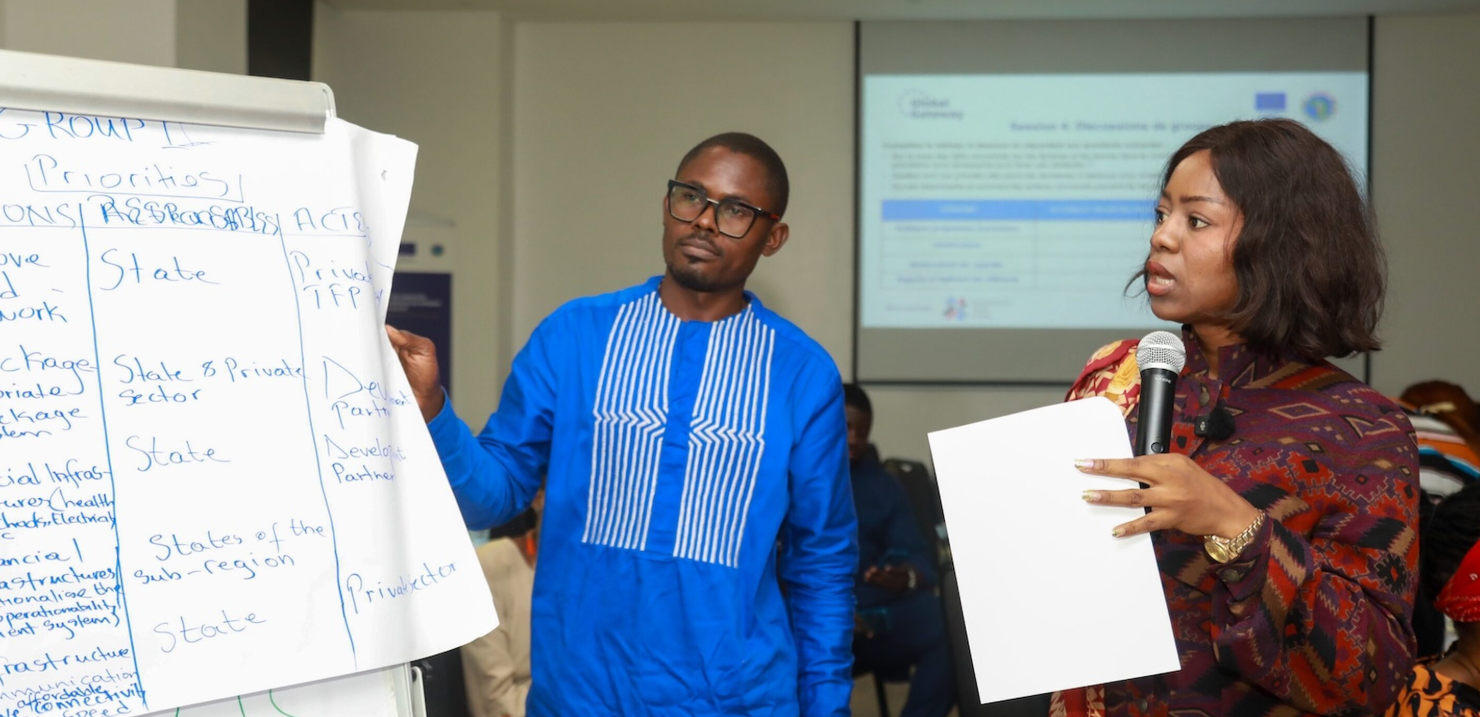
23 March 2026, Yaoundé, Cameroon – Presentation of the results of the group work.