When Stella Ereyukomhen boarded her flight from Lagos to Beijing, she expected to learn and explore new sales opportunities. She did not expect to return with an entirely new perspective on how her company – Royal Winosa Industries Ltd., which makes plantain flour and cassava chips – could grow in global markets.
Stella is part of the WEIDE Fund’s Discovery track, a 12-month programme that supports early-stage businesses through grants, technical assistance and coaching. During Nigeria’s WEIDE Mini Pitch competition, Stella convinced a jury of business leaders of Royal Winosa’s export potential.
Recommended by WEIDE, Stella was selected for a two-week study tour to China, where she participated in the 8th China International Import Expo (CIIE) together with 81 entrepreneurs backed by the International Trade Centre (ITC) on a visit funded by China.
The visit offered Stella a concentrated look at one of the world’s most sophisticated manufacturing and trade ecosystems. The experience blended structured learning, market exposure, and hands-on observation across four major cities: Beijing, Yiwu, Hangzhou, and Shanghai.
Learning from China’s transformation
The programme opened with a deep dive into China’s own development story — from agricultural scarcity to becoming a global industrial powerhouse. Stella joined other entrepreneurs in examining how policy choices, from mechanized farming to the creation of export-oriented zones, reshaped entire regions.
For Royal Winosa, which sources raw materials from smallholder communities, the parallels were striking. ‘Understanding how China aligned farmers, processors, and logistics gave me a clearer view of the gaps we need to close at home,’ she reflected in her trip notes.
Inside the world’s largest trading hubs
The visit to Yiwu, often called ‘the world’s marketplace’, brought theory into practice. Walking through enormous warehouses and procurement centers, Stella observed how goods are consolidated, checked, and prepared for global shipment. She also received an introduction to cross-border e-commerce platforms — a model she now sees as essential for reaching buyers beyond Nigeria.
‘Seeing how small products move through the system made me understand what efficiency really looks like,’ she wrote.
A digital shift in perspective
In Hangzhou, Stella explored digital innovation labs experimenting with new models of online retail. TikTok-driven marketing strategies, rapid content cycles, and data-driven branding contrasted to the traditional sales channels Royal Winosa had relied on.
The experience so eye-opening that, upon returning to Nigeria, Stella initiated a full rebranding process to reposition her products for both domestic and international markets.
Networking and market intelligence at the China International Import Expo
The trip culminated in five days at the CIIE — one of the world’s largest trade fairs. Surrounded by thousands of exhibitors, Stella saw how global competitors package, display, and pitch products similar to hers.
Daily surveys conducted by ITC showed promising early outcomes: Royal Winosa expects sales of up to $20,000 for plantain flour and cassava chips.
But beyond potential deals, the expo provided something less tangible but equally critical: comparative context. ‘Watching how other processors position themselves gave me a benchmark. It showed me what “global standard” really means,’ Stella noted.
I came back with new knowledge, new partners, and a clearer vision for the future — not just for my business, but for how Nigerian women entrepreneurs can take their place on the global stage.
More than a trip — A turning point
Across 44 participating countries, the CIIE programme built a vibrant community of women who shared experiences, compared challenges, and exchanged practical business strategies. For Stella, these connections proved that collaboration can be as powerful as competition.
‘This programme created opportunities to make global friends, share stories, laughter, and business planning,’ she said. ‘Strangers became friends and, along the way, a little business family. I came back with so many memories, new friends, and a heart full of joy.’
For Stella, the trip was a shift in mindset — a clearer picture of competitiveness and how Nigerian products can stand out.
‘This experience opened my eyes to what it truly means to compete globally,’ she said. ‘I realized I had been producing only for the Nigerian market, but now I see the need to rebrand and build the capacity required to meet international standards. I came back with new knowledge, new partners, and a clearer vision for the future — not just for my business, but for how Nigerian women entrepreneurs can take their place on the global stage.’
The impact is already visible. Royal Winosa is reviewing its packaging, refining its product story, and exploring new digital tools introduced during the mission. Export diversification — once a distant ambition — is now part of the company’s immediate planning. 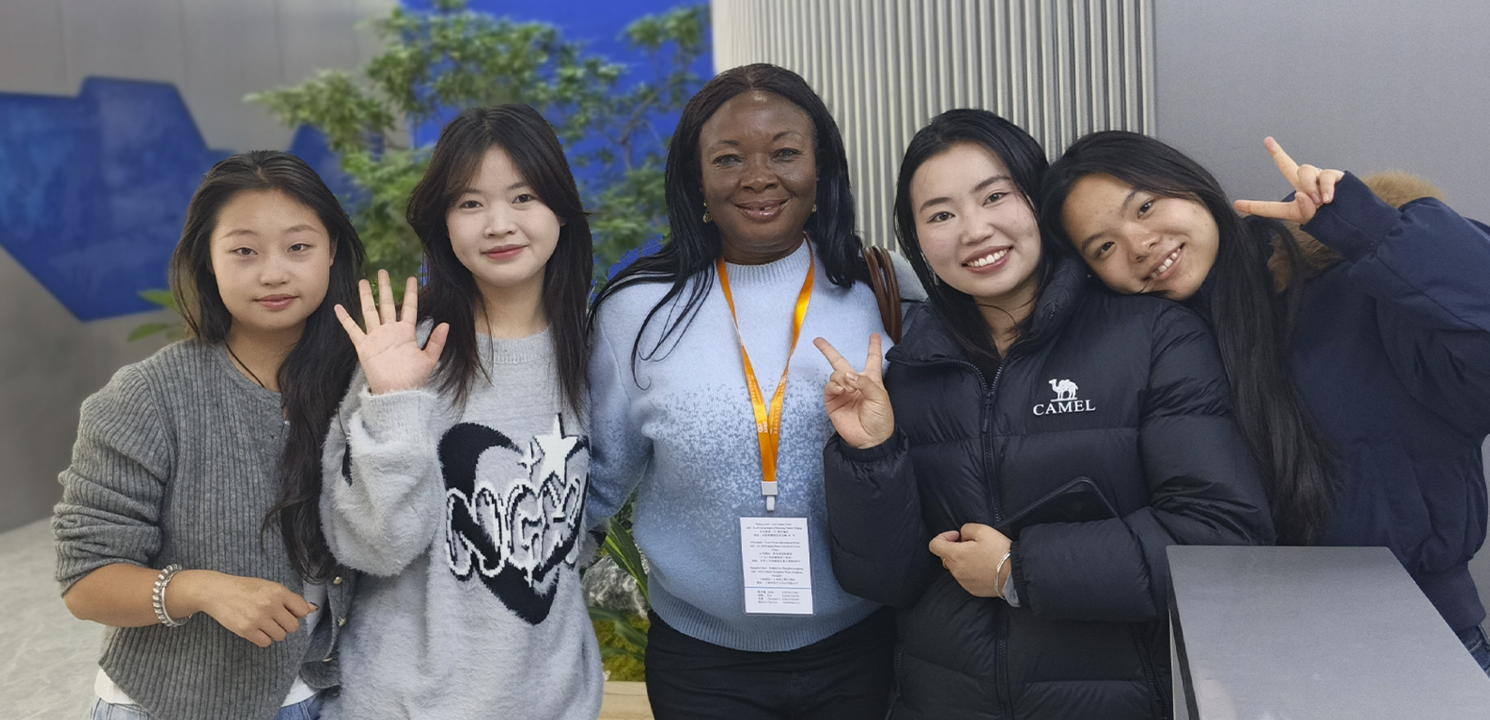
3 November 2025 – Stella visiting the Yiwu International Trade Market and the market procurement centre, where goods are consolidated for shipment to destinations worldwide. Photo by ITC