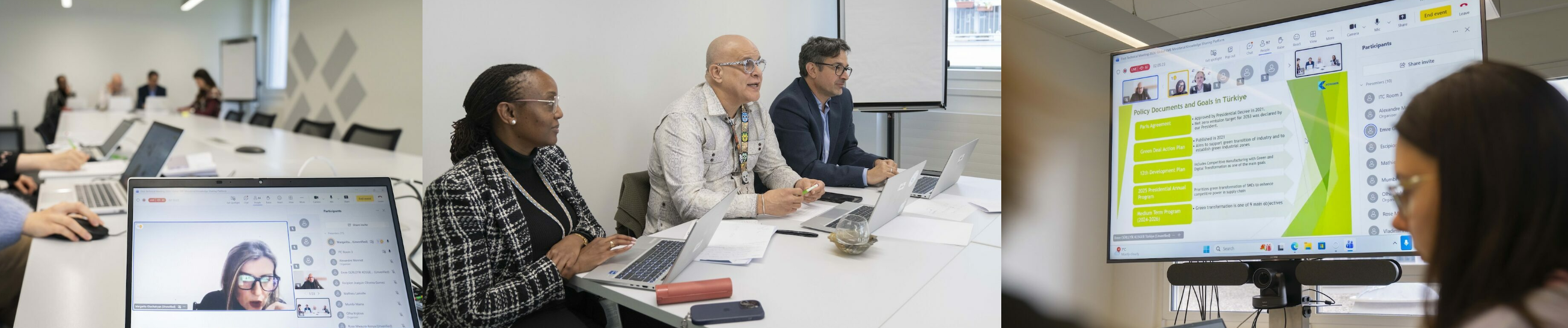
Over 74 countries participated in the latest technical meeting of the SME Ministerial community, which launched a phase of policy-sharing between countries seeking SME development.
The first meeting of the SME Ministerial community of 2026 saw an increase in the number of countries engaging with the process. This marks the beginning of a key phase of policy sharing which will mark the way towards the second Global SME Ministerial Meeting in 2027.
More than 70 countries joined the virtual gathering, with over 120 delegates representing countries from Asia, Africa, Latin America and Europe.
The officials are part of ministries or government agencies which are tasked with policymaking for small and medium-sized enterprises (SMEs).
On the day, the International Trade Centre (ITC) launched a new platform where countries can upload best practices in policies and regulations that seek to provide further development to SMEs, but also to learn from peers on what is working.
Each country will have a dedicated account for the platform, where countries can set up a page with the best practices that can support policy development at a regional, continental or global level.
At least 20 countries sent their inputs in advance to the launch.
Access the Knowledge Sharing Platform
Call to action
The meeting of technical officials also included the presentation of new ITC expertise and advocacy, as mandated by the 60 countries that endorsed the Call to Action of the first Global SME Ministerial Meeting, in July 2025, in Johannesburg.
ITC’s new access to finance strategy was presented to countries at this technical meeting, as well as the recently published guideline for Nationally Determined Contributions (NDC) for carbon emission reductions in their economies.
Yousif Muayad ALHadithi, Director of Climate Change Directorate in the Ministry of Environment of Iraq, commented during the meeting that his country had used the ITC guidelines in the process of preparations of their NDC guidelines, and relied on the technical expertise from ITC to complete the process.
Other countries, like Türkiye, Kenya, Cameroon and Armenia also shared with the group further examples of best practices in SME policymaking.
Advocacy was the other area touched by the Call to Action, which requested that ITC would raise the political significance of the SME sector in the global arena.
At COP30, Paris Agreement Parties invited ITC, the World Trade Organization, and UN Trade and Development (UNCTAD) to inform new thematic dialogues that will examine the role of trade in global climate action, and which will feed into a high-level event and consolidated report in 2028.
This acknowledges ITC’s role at the interface of trade, climate action and inclusive development, particularly its operational work with SMEs, smallholders and value chain actors who are most exposed to new climate-driven trade requirements.
The next meeting of technical officials of the SME Ministerial will be in April.