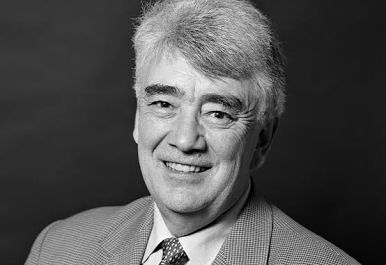
Roger Guesnerie, a past president of the EEA, passed away in Paris, France on January 4, 2026. He was a major figure in theoretical economics whose work shaped several core areas of the discipline, including general equilibrium theory, public economics, incentive theory, macroeconomic fluctuations, the theory of expectations, and climate economics. Born in February 1943 in Sainte-Gemmes-le-Robert, France, he was later educated at the École Polytechnique, and the École Nationale des Ponts et Chaussées.
Roger began his research career at (an ancestor of) CEPREMAP in the late 1960s. His early work quickly established his international standing. His 1975 Econometrica article on Pareto optimality in non-convex economies remains one of his most influential contributions. By extending general equilibrium analysis to environments with increasing returns and public production, it showed that standard welfare theorems need not hold and that efficiency and distribution cannot, in general, be separated in second-best settings. This work introduced new analytical tools and became a reference in mathematical and public economics.
During the 1970s and 1980s, Roger developed a body of research on second-best theory and public economics. His contributions to the theory of non linear-pricing, taxation and tax reform— published in Econometrica, the Journal of Economic Theory, and the Journal of Public Economics— played a central role in structuring modern optimal tax theory in general equilibrium environments. His book A Contribution to the Pure Theory of Taxation (1995) remains a standard reference.
In parallel, Roger made important contributions to incentive and contract theory, often in collaboration (with Jean-Jacques Laffont among others). These works addressed regulation, adverse selection, moral hazard, and the design of policy instruments under asymmetric information. From the mid-1980s onward, Roger increasingly focused on macroeconomic dynamics and expectation-driven phenomena. In a series of influential papers with a series of co-authors including Costas Azariadis, Pierre-André Chiappori, George Evans, and Michael Woodford, he analyzed sunspot equilibria, endogenous fluctuations, and the coordination of expectations. In the 1990s and 2000s, he became a leading contributor to the critical examination of the rational expectations hypothesis, developing the “eductive” approach to expectations formation and equilibrium selection. In the later part of his career, Roger turned to climate economics, contributing to the analysis of climate policy design, intertemporal efficiency, and collective decision-making under long horizons and deep uncertainty.
Roger held several positions in France (at CNRS, EHESS) as well as invited positions at Harvard University and the London School of Economics. He was elected a chair at the Collège de France in 2000 from which he retired in 2013. He played a significant role in the internationalization of French economic theory and was one of the key figures in the evolution of research institutions in Paris, that led to the creation of the Paris School of Economics in 2006, which he presided until 2015. He was an influential teacher and supervisor. Roger was also known for his kindness and his appreciation of good food and wine.
Alongside serving the EEA (President 1994), Roger was an editor or as associate editor of several leading journals. He will be remembered for his analytical rigor, his contributions to second-best theory, his sustained concern for the foundations and limits of economic reasoning, and, not least, for his deep engagement for the overall development of the discipline, in France and elsewhere.