At the luxurious Monaco Yacht Club, two companies showcased a collaboration in designer Tunisian silk at the MediThéria fashion show. They not only showed a new vision for Mediterranean style, but provided a case study in how high fashion can adopt the principles of environmental sustainability.
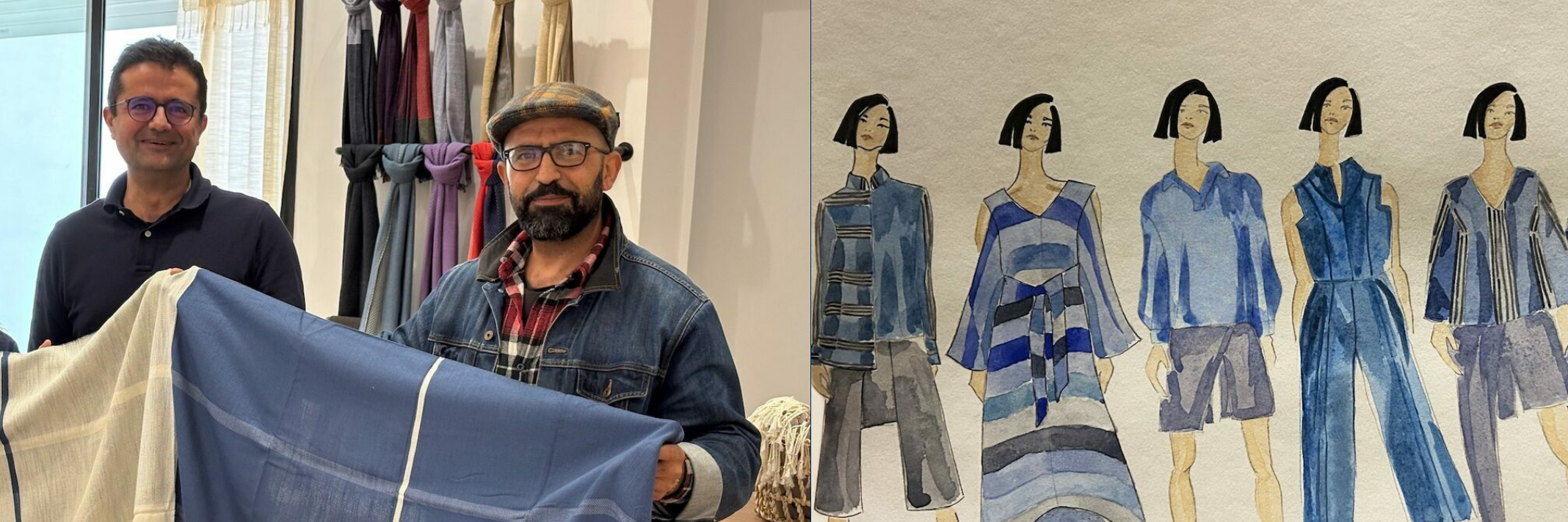
Designer Anissa Aida created the Weaving the Sea collection with handwoven silks from fabric maker SKILA. The fabric, both soft and resilient, was perfect for haute couture and ready-to-wear garments.
‘The 12-stripe swatch created by SKILA immediately caught my attention,’ said Anissa. ‘Stripes are part of my brand’s DNA, so I kept them as the main fabric for the collection, adding a Japanese-inspired stripe pattern and solid blue tones.’
They met through their work with the International Trade Centre (ITC) and the GTEX/MENATEX project on textiles and clothing.
Shared values guided their work: promote artisan excellence, showcase Tunisian luxury, and preserve ancestral craftsmanship.
"Alone, we may go faster, but together, we will go further. " Anissa Aida DesignerTunisia
Tunisian silk meets high fashion
‘Our collaboration was born from a shared admiration for SKILA’s work,’ Anissa said. ‘During the GTEX/MENATEX trainings, I had the opportunity to meet Hassine (Labaied) and Malek (Hamza), the founders, and the idea of creating a product together emerged naturally.’
For SKILA co-founder Hassine Labaied, the partnership was equally organic. ‘This collaboration is the result of two brands sharing the same values and celebrating the culture of beauty. We wanted to create an exceptional, handwoven natural silk fabric with sustainability at its core, enhanced by Anissa Aida’s creative vision. Sustainability was at the heart of this project.’
‘The creative industry is a long value chain,’ said Hassine. ‘Each link matters, but alone its impact is limited. By integrating all parts of the chain, we create real synergies. By exploring local craftsmanship, whose very essence is rooted in circularity, Tunisian designers can gain tremendously, as it offers unique differentiation and authentic storytelling.’
For SKILA, the collaboration provided an opportunity to test their high-end fabrics on more complex designs. ‘Moving from accessories like scarves to full garments required synergy with a seasoned designer,’ said Hassine. ‘This partnership allowed us to maintain each brand’s identity while testing the versatility of our fabrics.’
The process was not without challenges. The collection had to be developed quickly, and the delicate silk required new sewing and assembly techniques. These challenges strengthened both teams’ expertise and influenced future stylistic choices, particularly toward more fluid silhouettes suited to the fabric.
Sustainability was central to the project. From the handweaving using silk cone ends sourced from Italy to the reuse of scraps for small accessories like twillys, every step was designed to minimize environmental impact and integrate circularity. ‘By sharing our methods, we demonstrate that it is possible to create high-quality Tunisian products while fully integrating circularity and ethics into the value chain,’ said Anissa.
The Weaving the Sea collection was a remarkable success in Monaco, giving both brands international visibility and the opportunity to connect with a network of fashion professionals. It was also featured in the press, notably fashion magazine Grazia, enhancing the recognition of Tunisian luxury brands.
"Tunisia is full of talent, but to succeed, it is necessary to create and implement an adapted business model. Collaborations like ours challenge teams, establish new disciplines, and encourage aiming higher." Hassine Labaied Co-founder, SKILATunisia
Anissa added: ‘We are determined to continue this partnership, especially since the collection has been highly requested by our clients.’
Through this collaboration, Anissa Aida and SKILA demonstrate that creativity, craftsmanship, and sustainability can coexist harmoniously, offering an inspiring model for Tunisia’s fashion sector and the international stage.
GTEX/MENATEX will continue to identify and strengthen collaborations and synergies among designers, small businesses, startups, and leading companies to foster an innovative and competitive Tunisian textile sector.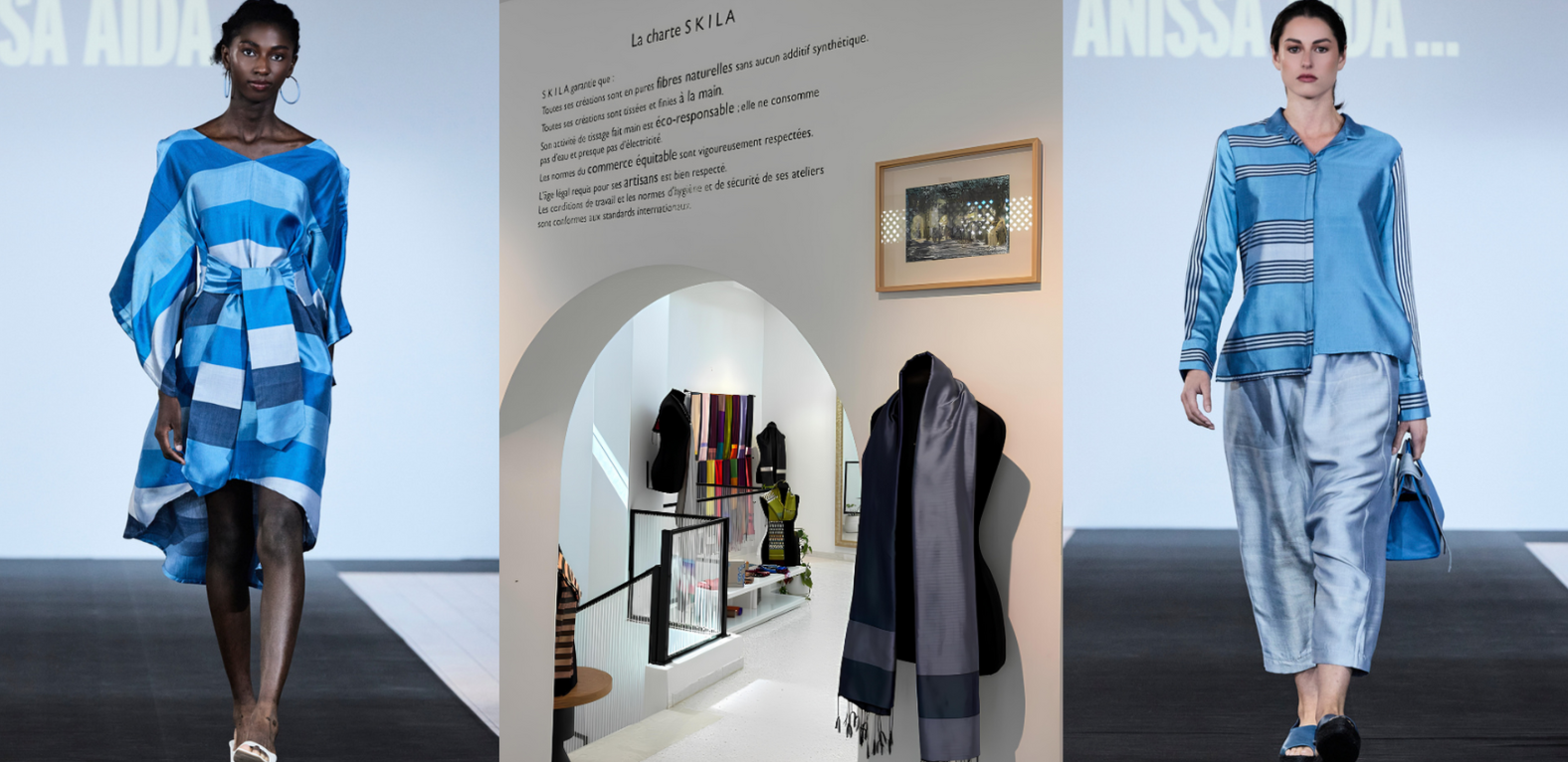
Two fashion models walk the runway at the MediThéria fashion show at the Monaco Yacht Club. The Weaving the Sea collection was created by designed Anissa Aida and fabric maker SKILA, whose work is shown in the centre image. Photo by ITC
About the programme
The Global Textiles and Clothing programme (GTEX) and its application in the Middle East-North Africa region (MENATEX), co-financed by the Government of Switzerland under GTEX and by the Governments of Sweden and Spain through MENATEX, is implemented in Egypt, Jordan, Morocco, Tunisia and Sri Lanka. GTEX/MENATEX phase II aims to create higher-value jobs and foster a sustainable economy through the export of quality textile & clothing products by providing crucial knowledge to help manufacturers navigate the sustainability and digitalization transition and supporting establishing connections with other initiatives to address global challenges affecting the T&C sector.