When African and European leaders met at their summit in Luanda, the International Trade Centre (ITC) took the opportunity to show the importance of small businesses to trade growth between the regions.
By providing tailored market insights and value chain support, we help small businesses navigate trade within Africa and with the European Union.
Held alongside the African Union-European Union Summit, the Business Forum provides a space for business leaders, policymakers and investors to discuss how to drive partnerships and investment across the two regions.
At the Forum, held 24 and 25 November in Luanda, ITC showed how the Africa Trade Competitiveness and Market Access (ATCMA) programme and the Africa Trade Observatory strengthen small businesses.
Small businesses represent 90% of African businesses, but they face persistent obstacles, including access to finance, high compliance costs, logistical bottlenecks, and market intelligence. That explains why that trade within the continent remains below 20% of all African trade.
This is where the ATCMA Programme comes in. We work with the new EU flagship Global Gateway initiative, a 300 billion euro strategy to invest in infrastructure internationally. The goal is to connect the EU market to regional economic blocs. In Africa, that means linking five regional trade blocs while pursuing continent-wide trade connections.
Tackling market barriers to Africa-EU trade
ITC led a session that shared how to expand exports, build resilient value chains, and catalyze investment. African business support organizations, European business leaders, and high-performing East Africa small businesses took part in the panel discussion. The session was opened by Amany Asfour, president of the Africa Business Council, the continent’s leading business group.
Three coffee businesses from Tanzania, Rwanda and Kenya supported by ATCMA demonstrated how the programme is already helping them to comply with regional and EU standards, upgrade quality, innovate in value addition, and access new markets. Their successes offering a preview of the scale and impact expected as the programme grows.
The East African enterprises also participated in business and investor networking activities and exhibited their expert packaged products, offering firsthand evidence of how AU-EU collaborations can translate the Global Gateway commitments into real competitiveness gains on the ground.
AU-EU Business Forum saw how better data allows smarter decisions
The ATCMA showcase concluded with a demonstration of the Africa Trade Observatory (ATO). The digital platform allows users to track trade trends, analyze market access conditions, and make better-informed decisions. By offering real-time data on tariffs, trade flows, and supply and demand patterns across Africa and the EU, the tool gives the intelligence needed to identify opportunities, reduce risks, and compete better.
As African SMEs continue to innovate and expand, programmes like the ATCMA illustrate the transformative potential of coordinated support, data-driven decision-making, and strategic partnerships paving the way for a more competitive, inclusive, and interconnected Africa–EU trade landscape.
The Joint Declaration of the Summit committed to deepen cooperation around trade, investment, infrastructure and sustainable development under the framework of the Global Gateway. Moving forward, ITC’s work will be guided by the African and European Business support organizations’ declaration urging for stronger partnerships, enhanced predictability in the business environment, and deeper value chain integration. 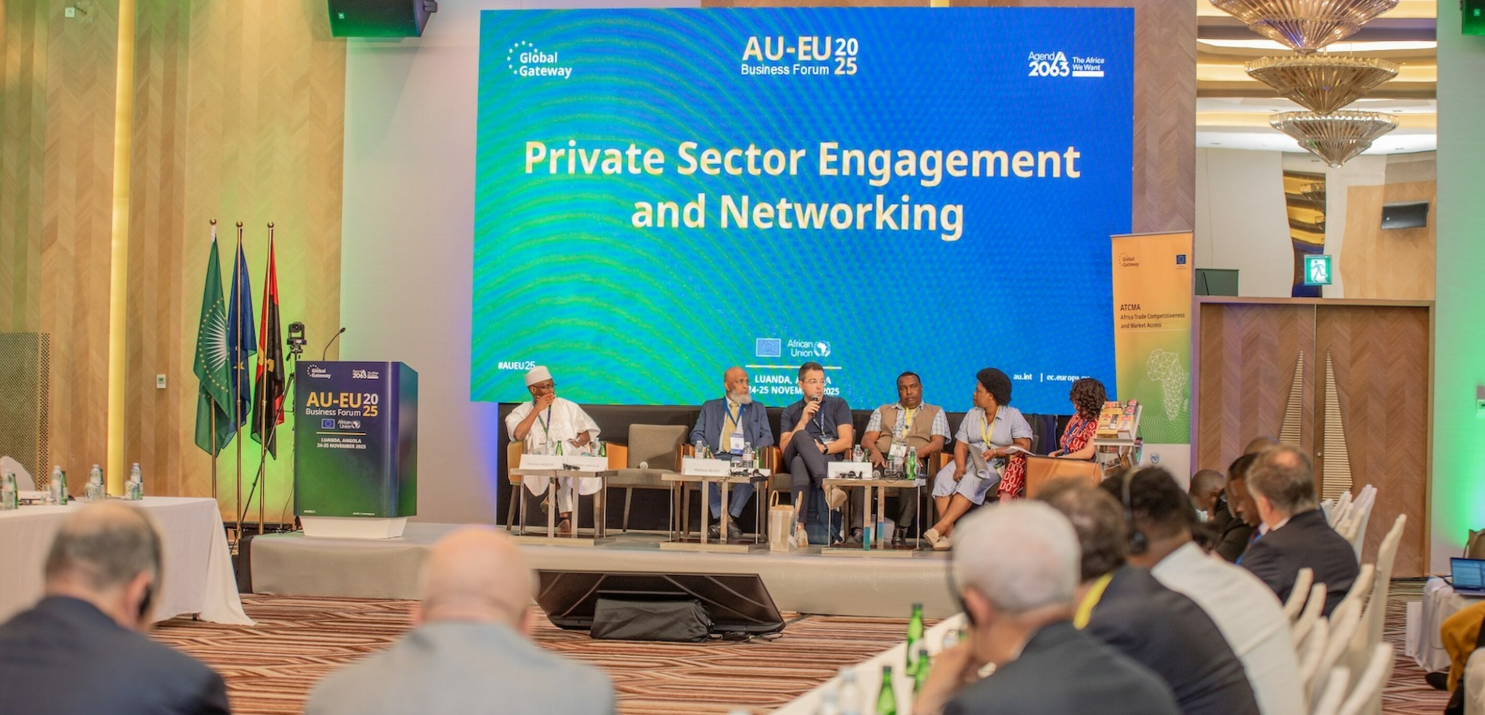
25 November 2025, Luanda, Angola – The panel discussion centred on 'Private sector driving intra-African and Africa-EU trade through the ATCMA.'
Photo by the African Union Commission/European Union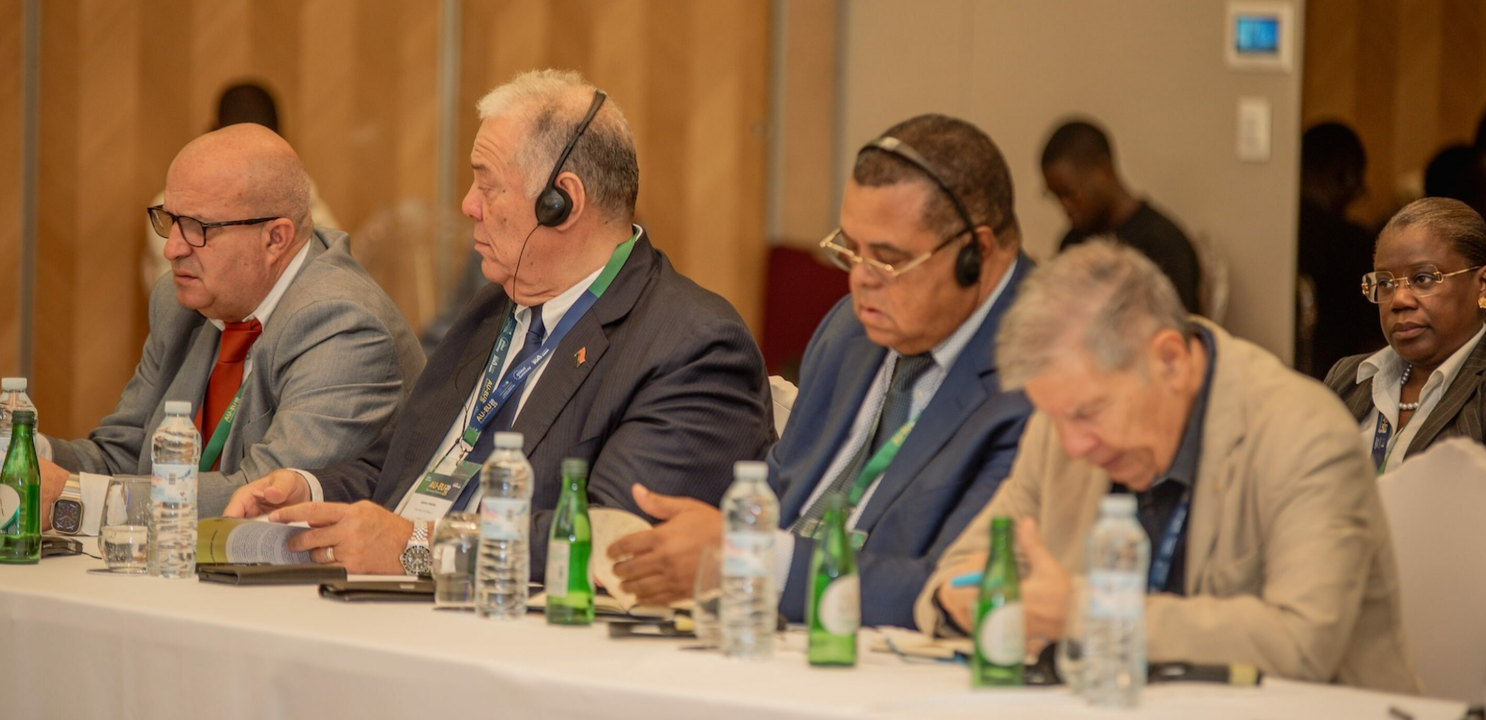
25 November 2025, Luanda, Angola – The ATCMA showcase concluded with a demonstration of the Africa Trade Observatory (ATO). The digital platform allows users to track trade trends, analyze market access conditions, and make better-informed decisions.
Photo by African Union Commission/European Union
About the ATCMA Programme
The ATCMA The Africa Trade Competitiveness and Market Access (ATCMA) Programme aims to sustainably increase intra-African trade and trade between Africa and the European Union (EU). Funded by the EU and implemented by the International Trade Centre (ITC) and the United Nations Industrial Development Organization (UNIDO), the four-year programme targets improving market access for specific value chains and increasing the export competitiveness of African small and medium-sized enterprises in these sectors. The umbrella programme is structured around a Continental Component and five Sub-regional Components: COMESA, EAC (MARKUP II), ECCAS, ECOWAS and SADC.
About EU-EAC MARKUP II
The European Union (EU)- East African Community (EAC) MARKUP II funded by the EU, aims to enhance economic development in the EAC through sustainable intra-African and EU-Africa trade. Focused on improving livelihoods, employment, and export competitiveness for MSMEs, the programme supports the development of key export-oriented value chains as well institutional support in the six MARKUP II EAC recipient partner countries. EU-EAC MARKUP II is promoting exports and investment through addressing trade barriers, value addition, quality compliance, trade facilitation and technology transfer. EU-EAC MARKUP II is implemented by the International Trade Centre in collaboration with the EAC Secretariat and national partners in the recipient countries.